








What's Happening?
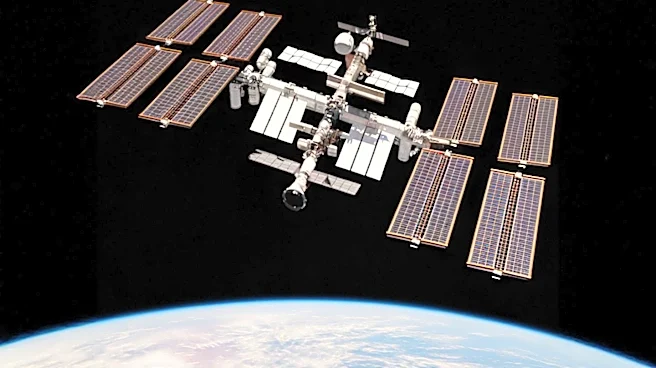
NASA is advancing cartilage engineering and cardiac research aboard the International Space Station (ISS) as part of its ongoing efforts to improve human health both in space and on Earth. Astronauts Jessica Meir and Jack Hathaway are working on cartilage cell
samples in the Kibo laboratory module, using microgravity to promote cell growth. The research aims to develop techniques for repairing injured cartilage and enhancing astronaut fitness during long-term space missions. Concurrently, Roscosmos cosmonauts are studying the effects of weightlessness on blood flow and the respiratory system, using sensors to measure physiological changes.
Why It's Important?
The research conducted on the ISS has significant implications for medical science and space exploration. Understanding how cartilage cells grow in microgravity could lead to breakthroughs in regenerative medicine, potentially benefiting patients with joint injuries on Earth. Additionally, insights into how weightlessness affects the human body are crucial for preparing astronauts for extended missions, such as those planned for Mars. These studies contribute to NASA's broader goals of ensuring astronaut health and safety while advancing scientific knowledge that can be applied to healthcare challenges on Earth.
What's Next?
The ISS will continue to serve as a platform for cutting-edge research, with upcoming experiments focusing on various aspects of human health and space technology. The results from the current studies will be analyzed and could inform future medical treatments and space mission protocols. As NASA prepares for more ambitious missions, including lunar and Martian exploration, the findings from these experiments will be integral to developing strategies for maintaining astronaut health in deep space.