

What's Happening?
The Florida Department of Transportation (FDOT) is preparing to rebuild the intersection of John Young Parkway (U.S. 17-92) and Pleasant Hill Road in Kissimmee. The project is currently in the design phase, with right-of-way acquisition scheduled to begin
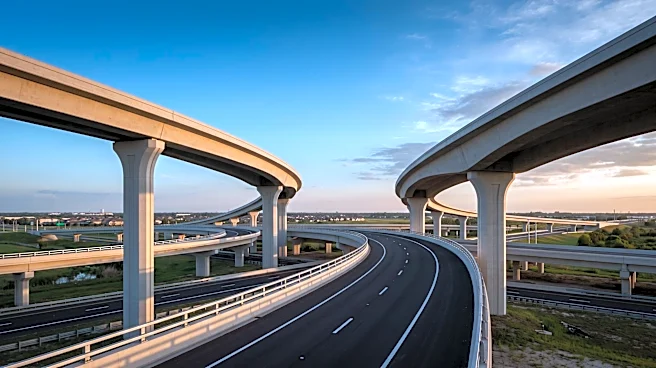
in late 2026. FDOT's project page, identified as Project 418403-7, indicates that the agency has programmed approximately $80 million for land purchases at this intersection across fiscal years 2027, 2028, and 2029, with additional funds for relocation. The design concept includes elevating a portion of U.S. 17-92 for northbound through traffic and constructing a new road to allow traffic from northbound Pleasant Hill Road to access northbound U.S. 17-92 without passing through the main intersection. The project is divided into two construction phases: Phase 1 (FPID 418403-8) involves building a bypass road through the southeast quadrant and improvements on U.S. 17-92 within the existing right-of-way, with a construction contract programmed at $94.9 million for fiscal year 2028. Phase 2 (FPID 418403-9) will focus on the overpass lanes along U.S. 17-92, with a construction contract programmed at $43.5 million for fiscal year 2030. Both construction items are currently listed as 'adopted, not begun.'
Why It's Important?
This significant infrastructure project will have a substantial impact on property owners and businesses located near the John Young Parkway and Pleasant Hill Road intersection in Kissimmee. The acquisition of land through eminent domain means that affected property owners are entitled to full compensation under Florida law, which extends beyond just the market value of the land. For commercial properties, the taking can result in damages related to lost access, parking, signage visibility, and truck circulation, all of which are compensable. Businesses with more than five years of operation may also claim business damages. The project's scale, with over $80 million allocated for land acquisition and over $138 million for construction, underscores its importance for regional traffic flow and development. Property owners need to understand their rights and the legal processes involved, particularly regarding the 30-day response window for offers and the 180-day deadline for submitting business damage claims, to ensure they receive fair compensation.
What's Next?
FDOT is expected to begin the right-of-way acquisition process in late 2026. Property owners in the affected areas, particularly those in the southeast quadrant and along U.S. 17-92, Pleasant Hill Road, and South Hoagland Boulevard, should prepare for potential eminent domain proceedings. Before receiving any written offers, property owners are advised to document their current property conditions, including access points, parking, and signage. They should also gather five years of business records if they operate a business on the parcel. Florida law requires FDOT to make a written offer before filing a lawsuit, and owners have at least 30 days to respond. Owners can request the appraisal report and right-of-way maps from FDOT. Legal counsel is recommended before responding to any offers, as attorney fees in Florida condemnation cases are calculated based on the benefit achieved against the condemning authority. The construction phases are programmed for fiscal years 2028 and 2030, indicating a multi-year project timeline.
Beyond the Headlines
The FDOT project at John Young Parkway and Pleasant Hill Road highlights the complex interplay between public infrastructure development and private property rights. Eminent domain, while necessary for public works, often creates significant challenges for property owners, who must navigate legal and appraisal processes to secure fair compensation. The project also reflects broader trends in urban planning and traffic management, as growing populations necessitate upgrades to existing infrastructure. The elevation of U.S. 17-92 and the creation of a bypass road aim to alleviate congestion and improve safety, but these benefits come at a direct cost to affected landowners and businesses. The legal framework for compensation, including provisions for business damages and attorney fees, is designed to mitigate these impacts, but proactive engagement from property owners is crucial. This project serves as a case study for how large-scale public works can reshape local communities and economies, emphasizing the importance of transparent communication and equitable compensation in such endeavors.