





What's Happening?
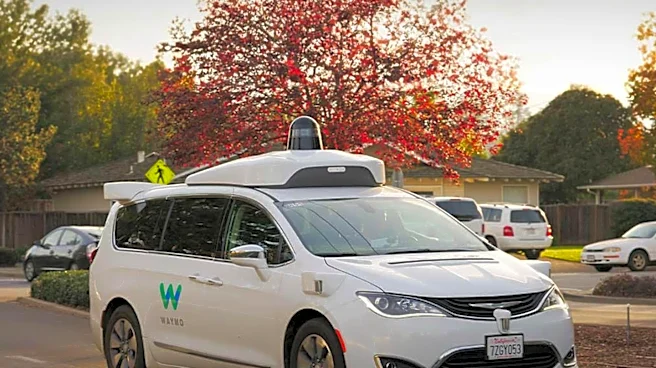
Waymo has introduced driverless ride-sharing services in Nashville, providing new independence for individuals who are blind or have low vision. The autonomous vehicles offer features such as audible route announcements and app-based location signals,
enhancing situational awareness for riders. This development addresses the challenges faced by the blind community in accessing reliable transportation, which often involves complex planning and reliance on drivers' communication skills. The introduction of Waymo's services represents a significant improvement in accessibility and convenience for blind individuals, offering a more intuitive and empowering transportation option.
Why It's Important?
The deployment of Waymo's autonomous vehicles in Nashville marks a crucial advancement in making transportation more inclusive for people with disabilities. By providing a reliable and accessible mode of transport, Waymo is helping to remove barriers that have historically limited the independence of blind individuals. This initiative could serve as a model for other cities, encouraging the adoption of similar technologies to improve accessibility. The broader societal impact includes increased mobility for a significant portion of the population, potentially leading to greater participation in economic and social activities.
What's Next?
As Waymo's services gain traction in Nashville, there may be increased advocacy for expanding autonomous vehicle networks to other cities. Stakeholders, including disability rights organizations and local governments, might collaborate to ensure that such technologies are integrated into public transportation systems. Additionally, ongoing feedback from users could drive further enhancements in vehicle design and service features, ensuring that the needs of the blind community are continuously met. The success of this initiative could also influence policy discussions around transportation accessibility and innovation.