

What's Happening?
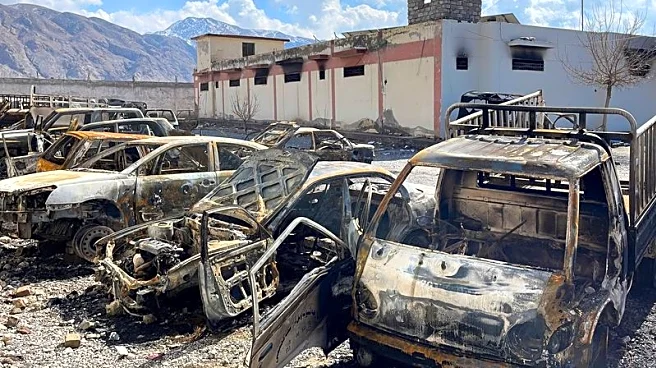
In Karachi, Pakistan, a massive fire at a shopping plaza has resulted in at least 15 confirmed deaths, with approximately 65 people still reported missing. The fire, which broke out late Saturday, was extinguished nearly 24 hours later, allowing rescue
teams to enter the building. The blaze spread quickly through shops storing cosmetics, garments, and plastic goods. Authorities, including Sindh provincial Chief Minister Murad Ali Shah, have announced compensation for the families of the deceased. The cause of the fire is currently under investigation, and the incident has drawn attention to Karachi's history of deadly fires linked to poor safety standards.
Why It's Important?
This tragic event highlights critical issues related to safety standards and emergency preparedness in Pakistan's urban centers. The economic implications are significant, as the destruction of commercial spaces impacts local businesses and the broader economy. The government's response, including financial compensation, reflects an effort to address the immediate needs of affected families. However, the incident underscores the need for systemic changes to prevent future tragedies. The recurring nature of such fires in Karachi suggests a pressing need for improved regulatory frameworks and enforcement to ensure building safety and protect lives.
What's Next?
The ongoing search and rescue operations will continue as authorities work to locate the missing individuals. The investigation into the fire's cause is expected to lead to discussions on enhancing safety regulations in commercial buildings. There may be increased public and governmental pressure to implement stricter safety standards and ensure compliance. The incident could also prompt policy changes aimed at improving emergency response capabilities and infrastructure in urban areas. Stakeholders, including civil society groups, may advocate for greater accountability and transparency in addressing these systemic safety issues.
Beyond the Headlines
The Karachi shopping plaza fire may serve as a catalyst for broader reforms in urban safety and planning in Pakistan. The incident could lead to a reevaluation of building codes and emergency response protocols, aiming to enhance public safety and prevent future tragedies. Additionally, it may influence public perception and trust in government institutions responsible for enforcing safety standards. Long-term, this tragedy could drive cultural and policy shifts towards prioritizing safety in urban development and infrastructure planning.