



What's Happening?
An international research team led by Volker Busskamp at the University Hospital Bonn, in collaboration with the University of Bonn and the Institute of Molecular and Clinical Ophthalmology Basel, has made significant advancements in retinal organoid
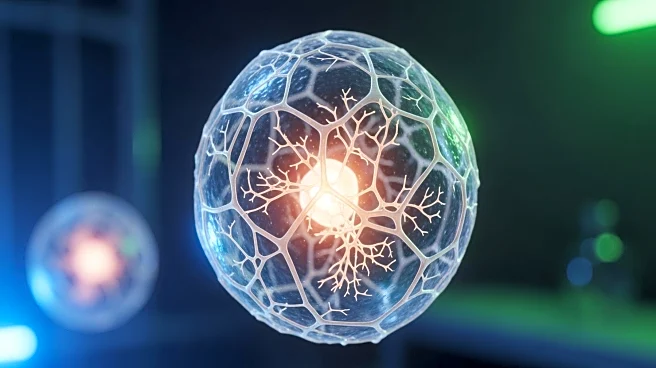
research. The team successfully integrated endothelial cells into human stem cell-derived retinal organoids, creating vascular networks that supply nutrients and oxygen. This development addresses the challenge of maintaining retinal ganglion cells within organoids over extended periods, which previously faced limitations due to insufficient nutrient and oxygen supply. The vascularized organoids demonstrated improved survival and functionality of retinal ganglion cells, which are crucial for transmitting visual information from the retina to the brain. The research also showed that these organoids could model retinal diseases and test new therapeutic approaches effectively.
Why It's Important?
This breakthrough in retinal organoid research holds significant implications for the field of ophthalmology and drug testing. By enhancing the survival and function of retinal ganglion cells, these vascularized organoids provide a more accurate model for studying human retinal development and diseases. This advancement could lead to better understanding and treatment of retinal degenerative diseases, offering hope for developing therapies for conditions like retinopathy of prematurity. Additionally, the ability to model disease conditions and test drugs in a controlled environment could accelerate the development of new treatments, potentially benefiting millions of individuals suffering from vision impairments.
What's Next?
The research team plans to further explore the potential of these vascularized retinal organoids in modeling various retinal diseases and testing therapeutic interventions. The method's adaptability to other organoid models suggests broader applications in studying different organ systems and diseases. Future research may focus on refining the integration techniques and exploring the organoids' responses to various stimuli, which could lead to more comprehensive in vitro models for drug testing and disease research.
Beyond the Headlines
The integration of vascular networks into retinal organoids not only enhances their functionality but also opens new avenues for ethical considerations in drug testing. By reducing the reliance on animal models, this technology could lead to more humane and efficient research practices. Furthermore, the ability to model human-specific diseases in vitro could provide insights into genetic and environmental factors affecting retinal health, potentially leading to personalized medicine approaches in ophthalmology.