






What's Happening?
Maryland has entered into a 20-year clean energy contract to purchase solar energy from REV Renewables' Jade Meadow III Solar Project, a deal state officials anticipate could save Maryland approximately $300 million. Approved by the Maryland Board of Public
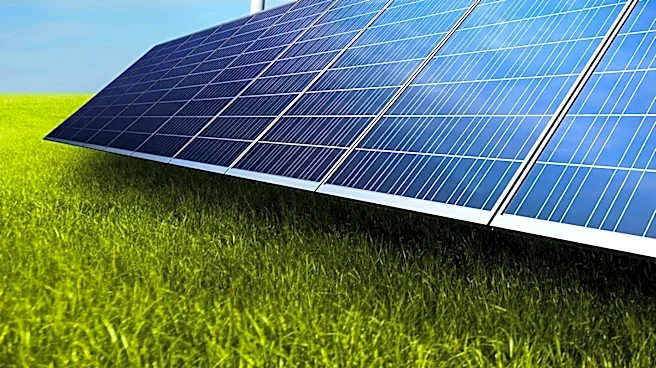
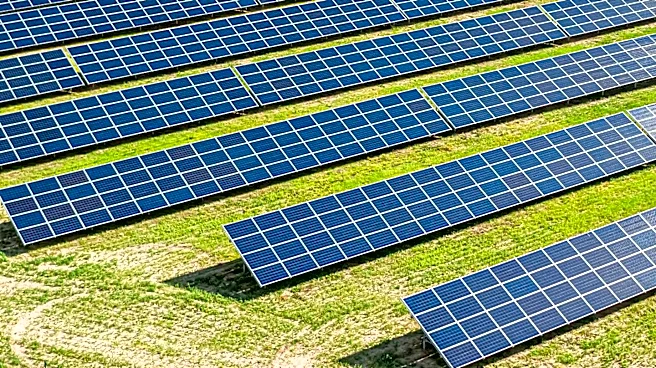
Works, this agreement allows the state to lock in supply and pricing years in advance, with the purchase set to begin in 2028. The 300-megawatt solar installation will be primarily built on a reclaimed coal mine in Garrett County and is expected to produce roughly 250,000 megawatt-hours of renewable power annually. Starting in 2028, this yearly purchase will constitute nearly 15% of the state's electricity portfolio and is equivalent to the electricity used by over 20,000 homes. Officials project potential savings ranging from $298 million to $515 million over the contract's duration, depending on future electricity market developments.
Why It's Important?
This long-term solar deal is significant as it demonstrates how states can leverage multi-year contracts to secure cleaner energy at more predictable prices, offering both environmental and economic benefits. By converting a former fossil fuel site into a source of solar generation, Maryland is not only expanding its renewable energy footprint but also repurposing underused land, avoiding the development of untouched areas. The projected savings of up to $300 million for state energy accounts can ease pressure on public budgets, illustrating that clean energy procurement can be a sound financial strategy, not just an environmental one. This initiative doubles Maryland's direct renewable energy procurement through power purchase agreements, signaling a strong commitment to climate goals while simultaneously aiming for fiscal responsibility. It provides a tangible example of how large-scale solar projects can contribute substantially to the grid and stabilize energy costs over time.
What's Next?
Construction of the Jade Meadow III Solar Project on the reclaimed coal mine in Garrett County will proceed, with the facility expected to become operational and begin supplying power to Maryland by 2028. The state will monitor electricity market developments to realize the projected savings, which could fluctuate within the estimated range. This agreement may encourage other states and public agencies to explore similar long-term clean energy contracts, especially those that offer both cost savings and environmental benefits. The success of this project could further solidify the framing of renewable energy as an economic imperative rather than solely an environmental one, potentially influencing future energy policy and investment decisions across the U.S. The state will also likely continue to seek opportunities to expand its renewable energy portfolio and reduce its carbon footprint.
Beyond the Headlines
This solar deal represents a strategic convergence of environmental stewardship, economic prudence, and land revitalization. The decision to build on a reclaimed coal mine carries symbolic weight, transforming a legacy of fossil fuel extraction into a beacon of renewable energy production. This approach offers a blueprint for sustainable development that addresses historical environmental impacts while fostering future energy independence. The long-term contract also highlights a shift in risk management for energy procurement, moving away from volatile fossil fuel markets towards more stable, predictable renewable energy sources. This could inspire broader policy discussions on how to incentivize similar projects that offer multifaceted benefits, including job creation in former industrial areas, enhanced grid resilience, and a more stable energy future for communities. It underscores the evolving narrative that clean energy is not just an expense but a strategic investment with significant returns.