
What's Happening?
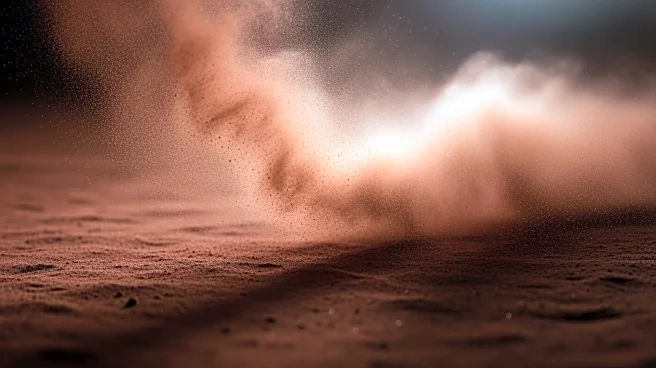
Recent observations have revealed the first direct evidence of electric discharges occurring within Martian dust storms. This discovery was made by researchers from the Institut de recherche en astrophysique
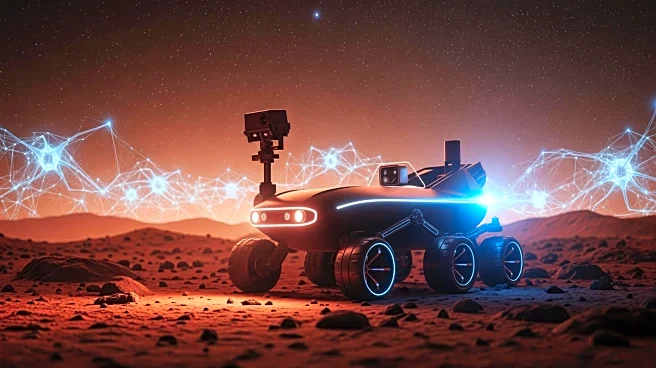
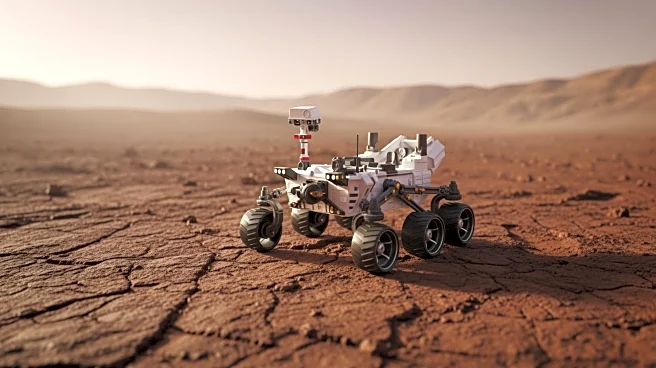
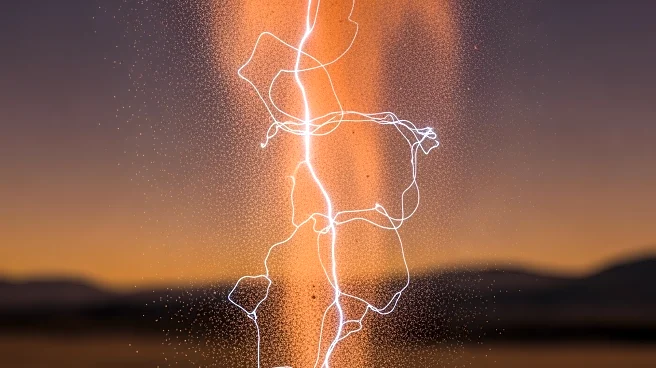
et planétologie and the laboratoire Atmosphères et observations spatiales. The findings were based on recordings from the SuperCam instrument aboard NASA's Perseverance rover, which detected electromagnetic and acoustic signals indicative of electric discharges. These discharges are similar to mild static shocks experienced on Earth. The sparks are generated when dust grains collide and rub against each other, accumulating electrical charges that are released as short electric arcs. This phenomenon, predicted for decades, has now been directly observed for the first time.
Why It's Important?
The discovery of electric discharges in Martian dust storms has significant implications for understanding the planet's atmospheric chemistry. The presence of these discharges suggests that the Martian atmosphere can reach charge levels sufficient to accelerate the formation of highly oxidizing compounds. These reactive substances can break down organic molecules on the surface and alter atmospheric chemicals, potentially explaining the rapid disappearance of methane on Mars. Additionally, the electrical activity could influence dust movement, which plays a crucial role in Martian weather and climate. This understanding is vital for future missions, as electrical discharges could interfere with spacecraft electronics and pose hazards for human explorers.
What's Next?
Future research will likely focus on further analyzing the impact of these electric discharges on Martian atmospheric processes and their potential effects on future missions. Scientists may explore ways to mitigate the risks posed by electrical activity to spacecraft and human missions. Additionally, continued monitoring of Martian dust storms and their electrical characteristics could provide deeper insights into the planet's climate and atmospheric behavior, aiding in the preparation for human exploration.
Beyond the Headlines
The discovery of electric discharges in Martian dust storms highlights the importance of sound recordings in planetary exploration. The SuperCam microphone aboard the Perseverance rover has proven to be a valuable tool, capturing sounds that reveal hidden processes on Mars. This method of exploration could be applied to other celestial bodies, offering a new dimension to the study of planetary environments. Understanding these electrical phenomena also contributes to the broader knowledge of how similar processes might occur on other planets with thin atmospheres.