






What's Happening?
The U.S. Coast Guard and Federal Aviation Administration (FAA) have launched a search operation for a medical jet that went missing near Nantucket. The Gulfstream G-100 aircraft, registered in Canada and operated by Latitude Air Ambulance, was carrying
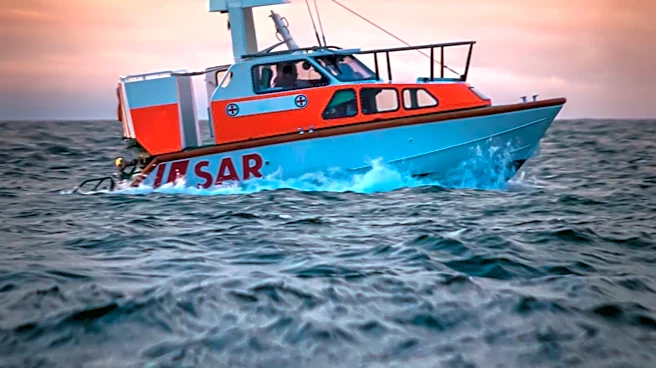
six people—four crew members and two passengers—on a flight from Bermuda to Boston. The plane departed L.F. Wade International Airport in Bermuda at approximately 11:40 p.m. ET on Friday. The FAA lost contact with the aircraft around 1 a.m. local time on Saturday, subsequently issuing a Search and Rescue Alert Notice. Data from FlightAware indicates that the plane's altitude dropped significantly from about 24,000 feet to 11,000 feet when it was approximately 128 miles south of Logan Airport, shortly before contact was lost. The search efforts are concentrated off the coast of Nantucket and involve various assets, including an HC-144 Ocean Sentry airplane, an HC-130 Hercules airplane, an MH-60 Jayhawk helicopter, a 47-foot Motor Lifeboat, and the FRC William Sparling, a Sentinel-class fast response cutter. Canadian Minister of Transport, Steve MacKinnon, confirmed that four of those on board are Canadian citizens.
Why It's Important?
This incident highlights the critical nature of air traffic control and search and rescue operations, particularly for medical transport flights. The rapid deployment of U.S. Coast Guard and FAA resources underscores the immediate response protocols for missing aircraft, especially those with medical designations. The involvement of Canadian citizens and a Canadian-registered aircraft also brings an international dimension to the search, necessitating coordination between U.S. and Canadian authorities. The sudden loss of altitude and communication raises concerns about potential mechanical failures or other in-flight emergencies, which could have broader implications for aviation safety regulations and aircraft maintenance standards for air ambulance services. The event also draws attention to the inherent risks associated with long-distance medical air transport, where timely and effective emergency response is paramount for patient and crew safety. The outcome of this search will be closely watched by the aviation industry and the public, potentially influencing future safety protocols and international cooperation in air rescue missions.
What's Next?
The U.S. Coast Guard and FAA will continue their extensive search and rescue operations off the coast of Nantucket. The search will likely involve expanding the search area and deploying additional resources as needed, depending on weather conditions and any new information that emerges. Authorities will also be investigating the last known communications and flight data to pinpoint the aircraft's potential location and understand the circumstances leading to its disappearance. The National Transportation Safety Board (NTSB) and Canadian transportation safety authorities will likely launch a joint investigation once the aircraft is located to determine the cause of the incident. Families of those on board are being kept informed by both U.S. and Canadian officials. The incident may prompt a review of safety procedures for air ambulance services and international flight protocols, particularly concerning communication systems and emergency response coordination for flights over open water.
Beyond the Headlines
The disappearance of a medical plane carrying six individuals, including patients, underscores the profound human element in aviation incidents. Beyond the technical and operational aspects, such events have a significant emotional and psychological impact on the families of those on board, as well as on the first responders involved in the search. The incident also brings to light the often-unseen work of air ambulance services, which provide vital medical transport under challenging conditions. The reliance on advanced tracking and communication systems in modern aviation is highlighted, and any failure in these systems can have catastrophic consequences. This event may also spark public discourse on the adequacy of current safety regulations for air ambulance operations, particularly for international flights, and the need for continuous technological advancements in aircraft tracking and emergency beacons. The broader implications could include increased scrutiny of aircraft maintenance, pilot training, and the resilience of communication infrastructure in remote or oceanic flight paths.