





What's Happening?
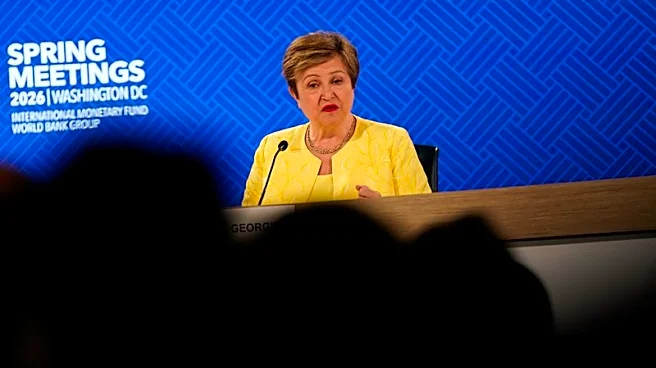
The International Monetary Fund (IMF) and Ukraine have been in discussions regarding the introduction of a Value Added Tax (VAT) on self-employed individuals. Ukrainian Prime Minister Yulia Svyrydenko announced that during talks in Washington, the IMF agreed
that the proposed VAT was 'not constructive' due to its sensitivity in Ukraine. This tax was initially part of the conditions for an $8 billion loan approved by the IMF in February. However, Ukrainian officials have expressed concerns about the tax's unpopularity and lack of support in parliament. Prime Minister Svyrydenko emphasized the need for alternative measures to ensure the revenue part of the budget for 2027, indicating that the decision on the VAT has been postponed rather than canceled.
Why It's Important?
The discussions between the IMF and Ukraine regarding the VAT on self-employed individuals are significant as they highlight the challenges of implementing fiscal reforms in exchange for international financial support. The sensitivity of the tax issue underscores the delicate balance between meeting loan conditions and maintaining public support. The outcome of these discussions could impact Ukraine's economic stability and its ability to secure future financial aid. Additionally, the decision to postpone the VAT reflects the complexities of policy-making in a politically and economically sensitive environment, potentially affecting Ukraine's fiscal policy and economic growth.
What's Next?
Moving forward, Ukraine will need to explore alternative fiscal measures to meet its budgetary requirements for 2027. The government may engage in further consultations with the IMF and European officials to identify viable solutions. The postponement of the VAT decision suggests that Ukrainian legislators and policymakers will continue to debate the best approach to balance fiscal responsibility with public acceptance. The outcome of these discussions could influence Ukraine's economic policies and its relationship with international financial institutions.