



What's Happening?
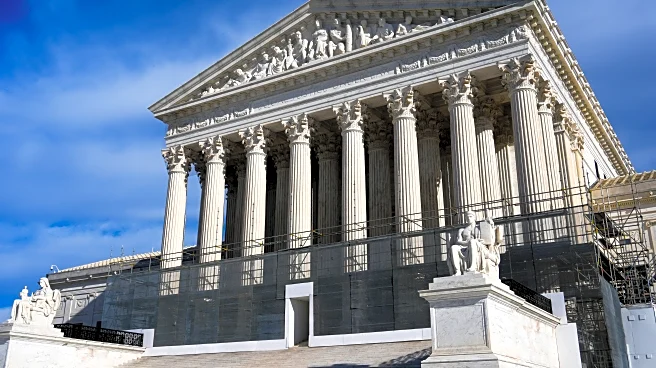
The Supreme Court of the United States ruled 6-3 against President Trump's tariffs, emphasizing that only Congress has the power to impose taxes. Neal Katyal, an Indian-origin American lawyer, represented small businesses affected by these tariffs, arguing
that the President overstepped his constitutional authority. The decision highlights the court's stance on the separation of powers, reinforcing that significant economic measures like tariffs require congressional approval. This ruling is a significant blow to President Trump's economic agenda, which relied heavily on using tariffs as a tool for foreign policy.
Why It's Important?
This ruling underscores the constitutional principle of separation of powers, reinforcing Congress's role in taxation. It challenges the executive branch's ability to unilaterally impose economic measures, potentially impacting future presidential actions. The decision may lead to economic adjustments as businesses and international partners respond to the removal of these tariffs. It also sets a precedent for how similar cases might be handled, affecting U.S. trade policy and international relations. The ruling could influence political dynamics, as it highlights the judiciary's role in checking presidential power.
What's Next?
Following the ruling, President Trump announced a new 10% global tariff, later increasing it to 15%, citing Section 122 of the Trade Act of 1974. This move is likely to face legal challenges, as it tests the limits of presidential authority under this statute. Congress may need to address the implications of this decision, potentially leading to legislative action to clarify or limit executive powers in trade matters. The situation could also influence upcoming elections, as political leaders and parties position themselves on trade and executive authority issues.