







What's Happening?
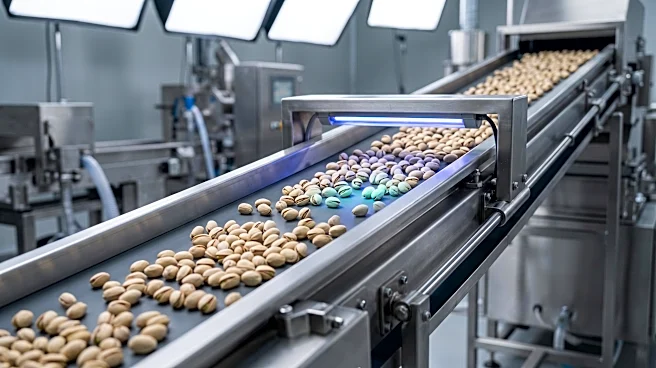
Iran has developed a smart screening system designed to detect and separate pistachios suspected of aflatoxin contamination. This system, created by a knowledge-based company at the Science and Technology Park of the University of Tehran, integrates robotics,
machine vision, and artificial intelligence. It operates by using UV fluorescence, high-speed imaging at 100 frames per second, and deep-learning algorithms to identify defects as small as 0.1 millimeters. Once detected, a pneumatic system removes the contaminated pistachios from the production line. The chief executive of the company, Mohammad Reza Farahnak, stated that the system was developed to address quality control needs within the pistachio and dried-fruit sector, requiring extensive data collection due to the varied visual and fluorescent indicators of aflatoxin contamination. The system's design combines mechanical engineering, electronics, control systems, and AI, allowing for optimization based on specific production line conditions and offering remote monitoring capabilities.
Why It's Important?
While this development is specific to Iran's pistachio industry, it highlights a growing global trend in leveraging advanced AI and machine vision for agricultural quality control and food safety. For the U.S., which is a significant consumer and producer of agricultural products, such technological advancements could influence future import standards and domestic production practices. The ability to rapidly and accurately detect contaminants like aflatoxins, which are harmful mycotoxins, has direct implications for public health and international trade. If similar systems become widespread, they could lead to stricter quality requirements for imported goods, potentially impacting U.S. agricultural businesses that export to countries adopting these technologies, or prompting U.S. producers to invest in similar solutions to maintain competitiveness and meet evolving safety standards. This also underscores the increasing role of AI in ensuring food security and reducing waste by efficiently identifying and removing compromised products.
What's Next?
The developing team plans to expand into export markets and create similar systems for other agricultural products, food items, and applications in recycling, industrial, and mineral quality control. This indicates a potential for broader adoption of such AI-driven screening technologies across various sectors globally. For the U.S., this could mean an increase in the availability of advanced food safety technologies, potentially leading to new partnerships or competitive pressures within the agricultural technology market. As these systems become more sophisticated and accessible, they may drive a shift towards more automated and precise quality control processes in food production and processing. Furthermore, the success of this Iranian innovation could encourage other nations, including the U.S., to invest further in AI research and development for agricultural and industrial applications, aiming to enhance product safety, efficiency, and market competitiveness.
Beyond the Headlines
This technological advancement extends beyond mere quality control; it touches upon the broader implications of AI in enhancing global food safety and trade. Aflatoxin contamination is a significant concern worldwide, posing health risks and leading to substantial economic losses due to rejected shipments and product recalls. The development of such precise and rapid detection systems could set new benchmarks for food safety, potentially influencing international trade agreements and regulatory frameworks. Ethically, it raises questions about the balance between technological efficiency and the potential impact on traditional labor in agricultural processing. Culturally, it reflects a global push towards higher standards of food quality and consumer protection, driven by technological innovation. In the long term, widespread adoption of these AI systems could lead to a more resilient and safer global food supply chain, reducing foodborne illnesses and improving the economic viability of agricultural exports for many countries, including those that trade with the U.S.