





What's Happening?
U.S. Senator Ben Ray Luján (D-N.M.) has introduced the No Trump Immunity Act, a legislative proposal aimed at preventing the Department of Justice (DOJ) from granting immunity to the President, Vice President, their immediate family members, and related
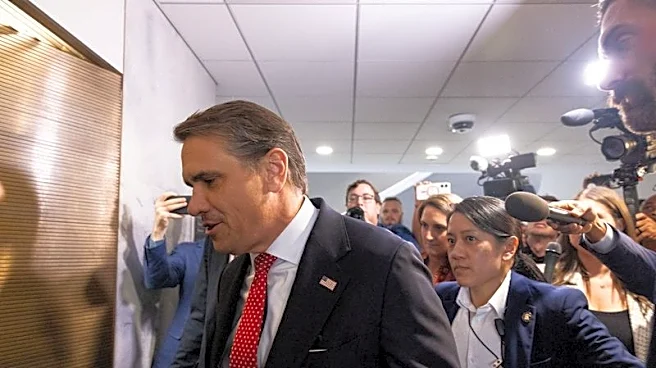
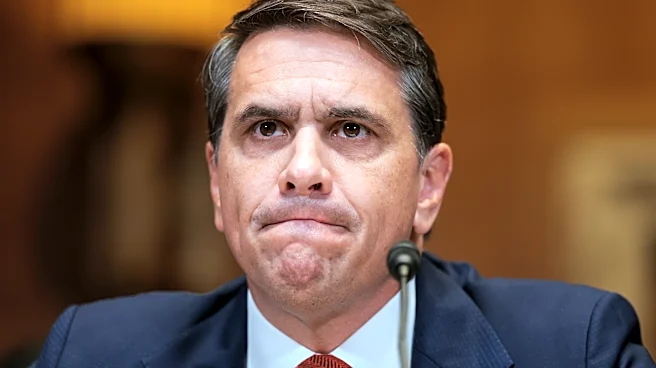
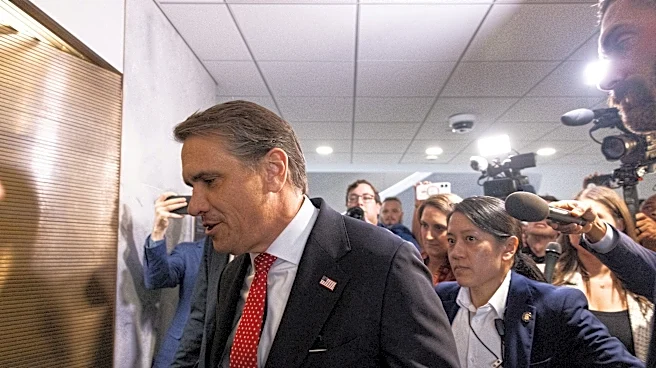
entities. This move comes amid the Senate Judiciary Committee's consideration of Todd Blanche's nomination as Attorney General. The bill is a response to recent actions by Acting Attorney General Todd Blanche, who provided President Trump and his family with immunity from IRS investigations as part of a DOJ-brokered deal. The legislation seeks to ensure that no individual, including the President, is above the law, and aims to restore public confidence in the DOJ's role as an enforcer of the law rather than a protector of political figures.
Why It's Important?
The introduction of the No Trump Immunity Act is significant as it addresses concerns about the potential misuse of DOJ powers to shield high-ranking officials and their families from legal accountability. By targeting the immunity provisions, the bill aims to prevent any future president from evading justice through legal loopholes. This legislation is supported by organizations like Common Cause and Citizens for Responsibility and Ethics in Washington (CREW), which emphasize the importance of maintaining the rule of law and public trust in government institutions. The bill's passage could lead to increased transparency and accountability within the executive branch, potentially impacting how future administrations handle legal challenges.
What's Next?
If the No Trump Immunity Act gains traction in Congress, it could lead to significant changes in how the DOJ handles cases involving high-ranking officials. The bill's progress will likely be closely monitored by political analysts and advocacy groups, as its implications could extend to future administrations. The Senate's decision on Todd Blanche's nomination as Attorney General may also influence the bill's reception and potential amendments. Stakeholders, including political leaders and civil society organizations, may engage in debates over the balance between executive privilege and accountability.