





What's Happening?
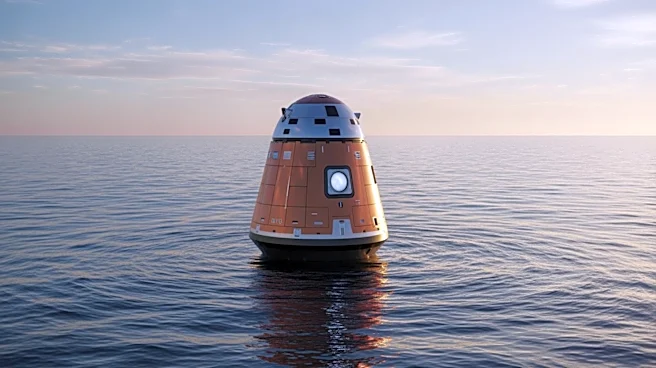
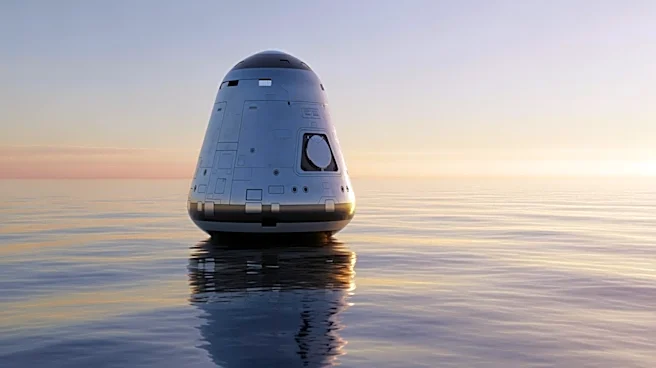
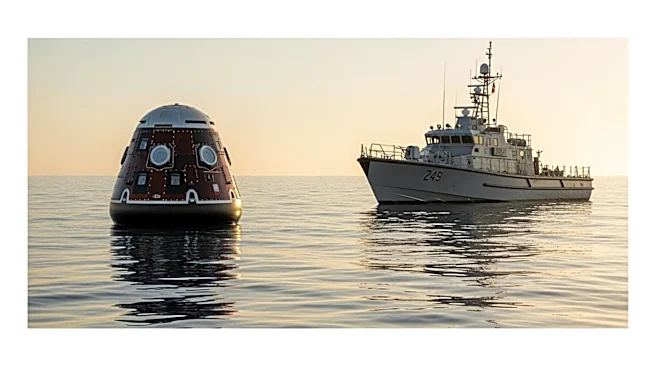
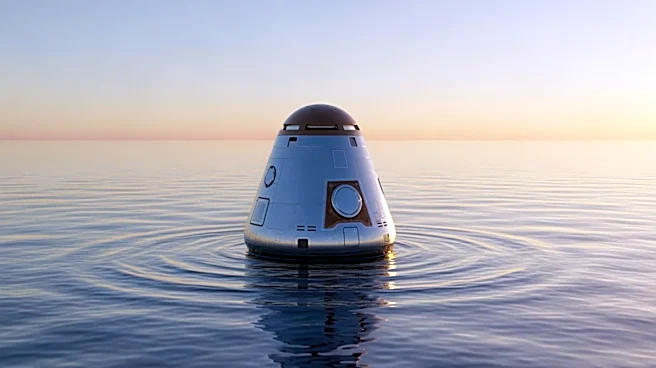
NASA's Artemis II mission has concluded with the successful splashdown of the Orion spacecraft off the coast of San Diego. The mission, which lasted nearly 10 days, saw astronauts Reid Wiseman, Victor Glover, Christina Koch, and Canadian Space Agency
astronaut Jeremy Hansen travel 252,756 miles from Earth. This mission marks a significant milestone in NASA's Artemis program, aimed at returning humans to the Moon and eventually reaching Mars. The crew's return was facilitated by the USS John P. Murtha, which approached the Orion spacecraft post-splashdown.
Why It's Important?
The successful completion of the Artemis II mission is a pivotal step in NASA's efforts to establish a sustainable human presence on the Moon. It demonstrates the capabilities of the Orion spacecraft and the readiness of NASA's systems for future deep space missions. The mission's success also strengthens international partnerships, as evidenced by the inclusion of a Canadian astronaut. This collaboration is vital for the future of space exploration, as it combines resources and expertise from multiple countries. The mission's achievements will inform the planning and execution of subsequent Artemis missions, ultimately contributing to the goal of human exploration of Mars.
What's Next?
Following the successful return of the Artemis II crew, NASA will analyze the data collected during the mission to refine and improve future missions. The next steps involve preparing for Artemis III, which aims to land astronauts on the lunar surface. This mission will further test the technologies and strategies necessary for sustained lunar exploration. Continued international collaboration will be crucial, as NASA works with partners to develop the infrastructure needed for long-term human presence on the Moon and beyond.