
What's Happening?
The Tara Ocean Foundation, a French organization focused on ocean conservation, is launching the Tara Polaris 1 scientific expedition to the Arctic. This mission aims to monitor climate change and its
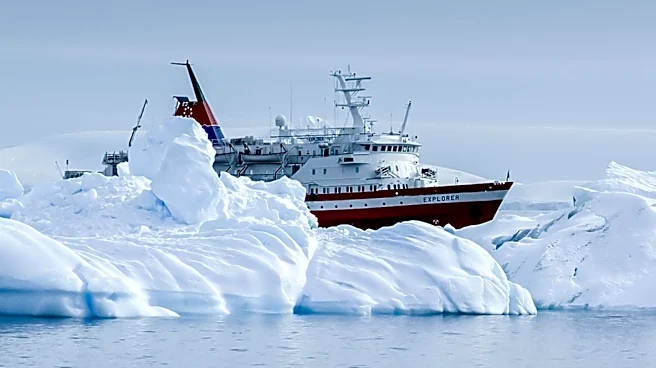
effects on the ocean. The expedition will utilize the Tara Polar Station, a drifting laboratory equipped with six laboratories and comprehensive scientific equipment, to conduct research over an 18-month period from 2026 to 2027. Neste, a company known for its renewable energy solutions, is supporting this initiative by supplying Neste MY Renewable Diesel. This renewable diesel will replace fossil fuels in the station's energy systems, significantly reducing the expedition's climate impact. The renewable diesel will power generators and heating systems, with the remainder used for propulsion. The expedition is part of a 20-year program in collaboration with 30 research institutes, aiming to provide scientific evidence on the impact of climate change on the Arctic Ocean.
Why It's Important?
The Arctic Ocean plays a crucial role in global climate regulation, acting as a planetary cooling system. However, it is warming three to four times faster than the rest of the planet, making it a significant indicator of climate change. The Tara Ocean Foundation's expedition is vital for understanding and documenting these changes, which can inform global decision-makers. By using renewable diesel, the expedition sets a precedent for sustainable practices in scientific research, highlighting the importance of reducing greenhouse gas emissions. This initiative not only contributes to climate science but also demonstrates the potential of renewable energy solutions in extreme environments, potentially influencing future policies and practices in both the scientific and energy sectors.
What's Next?
The Tara Polar Station began its journey from Lorient, France, and after refueling in Dordrecht, the Netherlands, it will proceed to Norway before entering the Arctic. The expedition is expected to start in mid-August. As the research progresses, findings from the expedition will likely be shared with the scientific community and policymakers, potentially influencing climate policies and conservation efforts. The success of using renewable diesel in such harsh conditions could encourage broader adoption of sustainable energy solutions in similar projects worldwide.