




What's Happening?
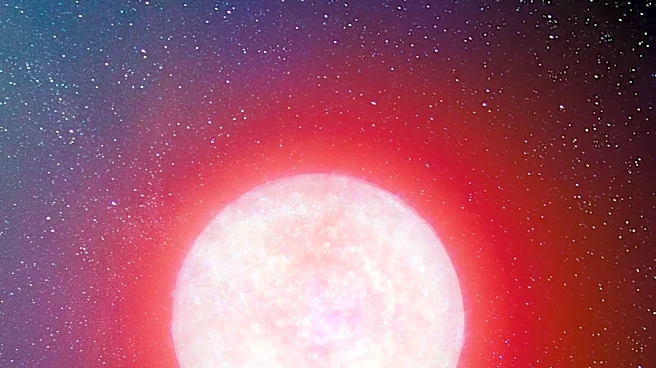
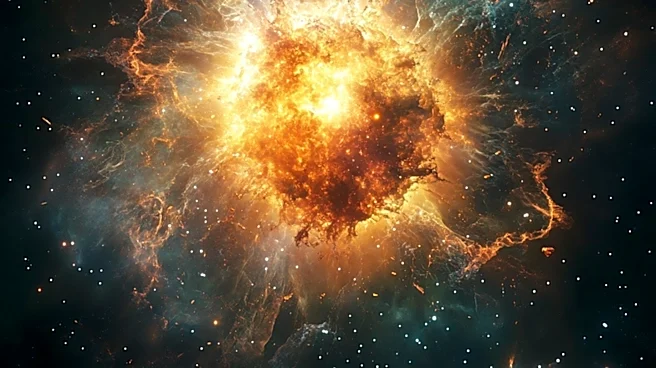
Recent simulations suggest that supernova explosions from the Universe's first stars scattered essential elements for rocky planet formation as early as 100 million years after the Big Bang. These Pop III supernovae distributed elements like carbon, oxygen,
and iron, enriching nearby gas clouds. This enrichment led to the formation of planet-building disks around young stars, potentially containing water. The study, led by Dr. Daniel Whalen from the University of Portsmouth, indicates that conditions for planet formation existed much earlier than previously thought.
Why It's Important?
This research challenges existing theories about the timeline of planet formation in the Universe. The presence of water and essential elements in early planet-forming disks suggests that habitable worlds could have emerged much earlier than previously believed. This has implications for the search for extraterrestrial life and understanding the conditions necessary for life to develop. The findings could influence future astronomical research and the study of cosmic evolution, potentially reshaping our understanding of the Universe's history.