


What's Happening?
An airplane pilot was killed in a violent collision with a Pennsylvania State Police helicopter near a runway at a small airport in Carlisle, Pennsylvania. The incident occurred on Wednesday, approximately 110 miles northwest of Philadelphia. According
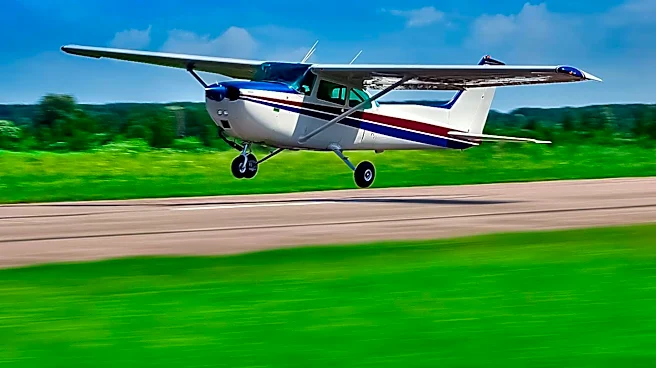
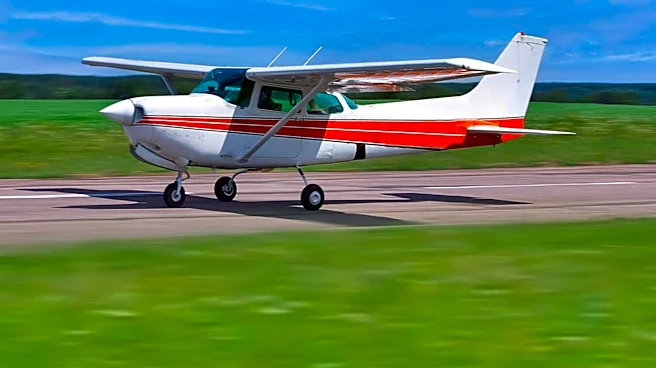
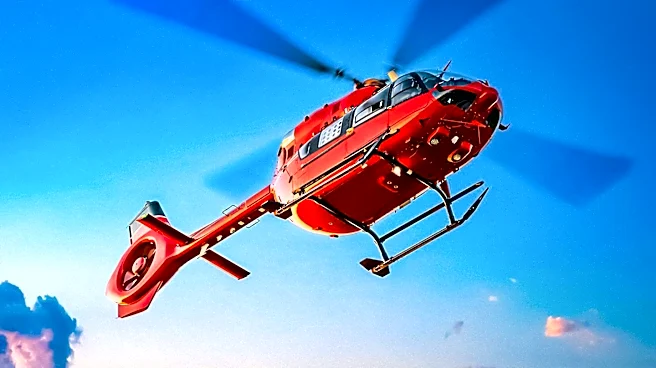
to Lt. Col. George Bivens, the state’s acting police commissioner, the plane was approaching the runway and veered into the helicopter, which was near the ground. The Federal Aviation Administration (FAA) and the National Transportation Safety Board (NTSB) are investigating the crash, which they described as a midair collision, though state police did not confirm if the plane was airborne at the time. The involved aircraft were a Bell 407 helicopter and a Cessna 150, a two-seat trainer aircraft. The helicopter lost its blades and tail boom and crashed onto its side. Both state troopers aboard the helicopter survived and are in stable condition after being trapped and then extricated from the wreckage. Officials have not yet released the identity of the deceased pilot.
Why It's Important?
This incident highlights the critical importance of air traffic control and safety protocols, particularly in the vicinity of airport runways. The involvement of a state police helicopter underscores the risks faced by law enforcement personnel during training exercises and routine operations. The fact that both pilots in the helicopter survived, despite the severity of the crash, points to the robust safety features and training within the police's elite aviation unit. Conversely, the fatality of the airplane pilot emphasizes the inherent dangers of aviation, even in smaller aircraft typically used for training. The ongoing investigation by the FAA and NTSB will be crucial in determining the exact cause of the collision, which could lead to revised safety procedures or regulations for general aviation and law enforcement air operations, potentially impacting pilot training, air traffic management, and aircraft design standards across the U.S.
What's Next?
The Federal Aviation Administration (FAA) and the National Transportation Safety Board (NTSB) have launched a full investigation into the collision. Their primary objective will be to determine the precise sequence of events that led to the crash, including factors such as air traffic control communications, pilot actions, and any mechanical failures. This investigation will involve analyzing flight data recorders, interviewing witnesses, and examining the wreckage. The identity of the deceased pilot will be released once next of kin have been informed. The findings from this investigation could result in new safety recommendations or mandatory changes in aviation procedures, particularly for small airports and for interactions between general aviation aircraft and law enforcement or emergency services helicopters. State police will also likely conduct an internal review of their aviation unit's training protocols and equipment maintenance.
Beyond the Headlines
The tragic collision raises broader questions about the increasing complexity of airspace, especially around smaller, less controlled airports where various types of aircraft, from private planes to law enforcement helicopters, operate. The incident could prompt a re-evaluation of communication protocols and visual flight rules in uncontrolled airspace, potentially leading to enhanced technological solutions for collision avoidance or more stringent training requirements for pilots operating in such environments. Furthermore, the event may spark discussions about the psychological impact on first responders and the aviation community, as well as the public's perception of aviation safety. The investigation's outcome could influence insurance policies for aircraft, liability laws, and the overall regulatory framework governing both civilian and public service aviation in the United States.