




What's Happening?
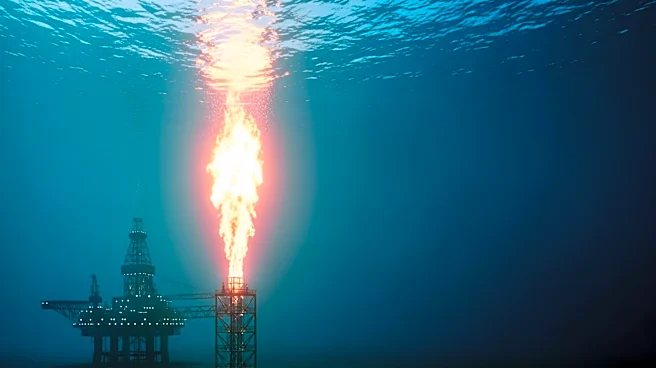
Libya's National Oil Corporation (NOC) has announced a significant discovery of gas in the subsea area off the western part of the country. This discovery was made in collaboration with energy companies from Italy, Spain, and Algeria. The NOC revealed
that the discoveries were made at a depth of 10,459 feet, with promising flow rates from the reservoir. The first discovery, in the Ghadames oil basin, was made alongside Algeria's Sonatrach, showing production rates of 13 million cubic feet of gas and 327 barrels of condensate daily. The second discovery involved Italy's Eni North Africa, with flow rates of 14 million and 24 million cubic feet. The third discovery, with Spain's Repsol, was in the Murzuq Basin, producing 763 barrels per day. These developments could enhance Libya's role as a key energy supplier in the Mediterranean region.
Why It's Important?
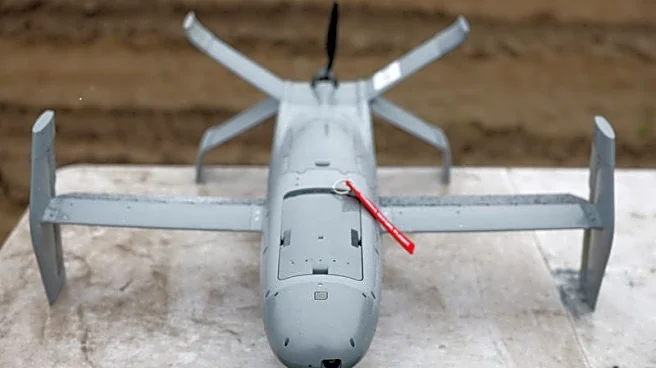
This discovery is crucial for Libya's economy, where oil and gas are major economic drivers, accounting for 95% of its economic output. The new findings could bolster Libya's position as a significant energy supplier in the Mediterranean, potentially stabilizing its economy and increasing its influence in regional energy markets. The collaboration with European companies also highlights the strategic partnerships Libya is forming to enhance its energy sector. This development comes amid regional tensions, including Ukraine's use of Libyan territory for military operations against Russian interests, underscoring the geopolitical complexities surrounding energy resources in the region.
What's Next?
The discoveries are likely to lead to further exploration and development activities in Libya's offshore areas, potentially attracting more international investment. The NOC and its European partners may proceed with detailed assessments and planning for commercial production. Additionally, the geopolitical implications of these discoveries could influence regional energy dynamics, with Libya potentially playing a more prominent role in supplying energy to Europe. The situation may also prompt responses from other regional players, particularly in light of ongoing conflicts and sanctions affecting energy trade routes.
Beyond the Headlines
The discovery highlights the ongoing importance of fossil fuels in global energy supply, even as the world shifts towards renewable energy sources. It also raises questions about the environmental impact of new oil and gas developments in sensitive marine environments. Furthermore, the involvement of European companies in Libya's energy sector reflects broader geopolitical strategies to secure energy resources amid global uncertainties. The situation underscores the delicate balance between economic development, environmental sustainability, and geopolitical interests in the energy sector.