






What's Happening?
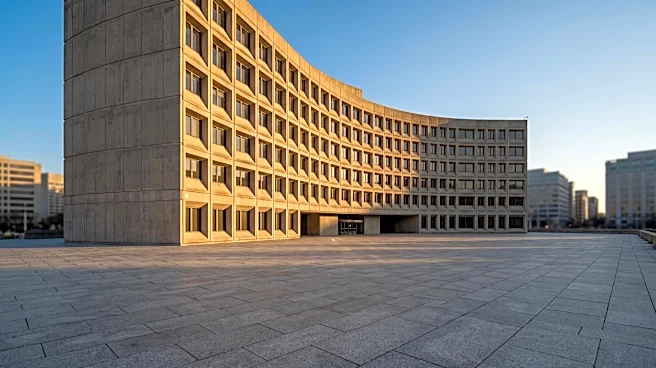
Representative Alma Adams has introduced the "Faith-Based Affordable Housing Predevelopment Fund Act." This proposed legislation aims to establish a five-year pilot program under the Department of Housing and Urban Development (HUD). The program would
provide competitive grants specifically for the early-stage costs associated with developing affordable housing projects by faith-based organizations. The bill has garnered support from several key organizations, including the Faith-Based Housing Initiative, the Local Initiatives Support Corporation, and Lutheran Services in America. This initiative seeks to leverage the resources and community ties of faith-based groups to address the ongoing need for affordable housing across the nation. The focus on predevelopment costs suggests an effort to remove initial financial barriers that often hinder such projects from moving forward.
Why It's Important?
This bill is significant because it addresses a critical need for affordable housing in the U.S. by empowering faith-based organizations, which often have deep community roots and access to land or facilities. By providing grants for predevelopment costs, the legislation could unlock numerous projects that might otherwise stall due to initial financial hurdles like feasibility studies, architectural designs, or legal fees. This could lead to an increase in the supply of affordable housing units, benefiting low-income families and individuals. The involvement of organizations like the Faith-Based Housing Initiative and Lutheran Services in America highlights a collaborative approach between government and community groups to tackle social issues. If passed, the act could serve as a model for future public-private partnerships aimed at community development and social welfare, potentially reducing homelessness and improving living conditions for vulnerable populations.
What's Next?
The "Faith-Based Affordable Housing Predevelopment Fund Act" will now proceed through the legislative process, requiring committee review, potential amendments, and votes in both the House of Representatives and the Senate. If it successfully passes both chambers, it would then be sent to the President for signature to become law. Stakeholders, including the endorsing organizations and other affordable housing advocates, will likely lobby for its passage. The implementation of the pilot program, if approved, would involve HUD establishing guidelines for grant applications and distribution. The success of this initial five-year program would be crucial in determining whether such initiatives are expanded or made permanent, potentially influencing future federal funding strategies for affordable housing.
Beyond the Headlines
The introduction of this bill touches upon broader discussions regarding the role of faith-based organizations in public service and social welfare. It raises questions about the extent to which government funding should be directed towards religious entities for secular purposes, a topic that often sparks debate regarding the separation of church and state. However, by focusing on affordable housing, a universally recognized social good, the bill attempts to navigate these sensitivities by emphasizing the outcome rather than the religious affiliation of the service provider. This approach could set a precedent for how federal programs engage with diverse community organizations to achieve public policy goals, potentially fostering more inclusive and community-driven solutions to complex societal challenges. It also underscores the growing recognition of the untapped potential within faith communities to contribute to national development.