









What's Happening?
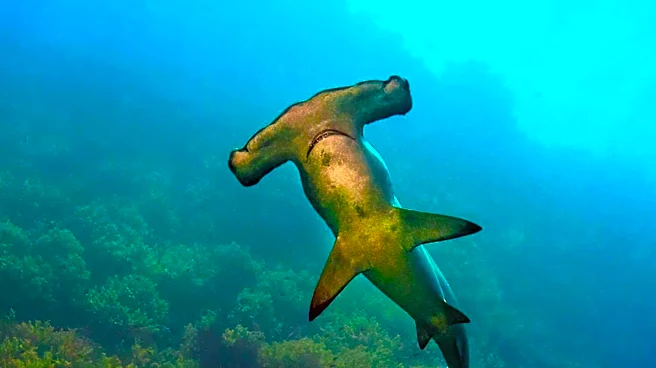
A 14-foot great hammerhead shark was found dead on Carolina Beach, North Carolina. The North Carolina Shark Conservancy reported the discovery, noting a deep laceration near the shark's tail and puncture wounds in its mouth, possibly from fishing gear.
The cause of death remains undetermined. Volunteers and local agencies worked together to handle the shark's removal and collect samples for research. Great hammerhead sharks are the largest species of hammerhead sharks, typically found in warmer waters.
Why It's Important?
The death of the great hammerhead shark raises concerns about the impact of human activities on marine life. The presence of fishing gear-related injuries suggests potential issues with fishing practices and their effects on shark populations. This incident highlights the need for sustainable fishing practices and increased awareness of marine conservation. Understanding the causes of such events can inform policies and efforts to protect vulnerable species and maintain ecological balance in marine environments.
Beyond the Headlines
The incident underscores the broader challenges facing marine conservation, including habitat destruction, pollution, and overfishing. The study of shark populations and their health is crucial for maintaining marine biodiversity and ecosystem stability. Public awareness and education about the importance of sharks in marine ecosystems can drive conservation efforts and policy changes to protect these vital species.