






What's Happening?
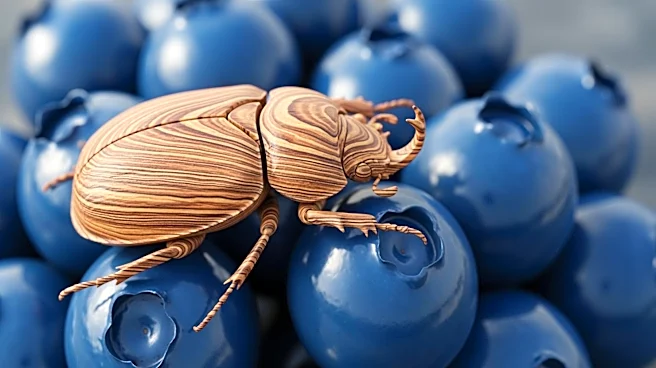
North Carolina's blueberry industry is facing a new threat from the Prionus imbricornus beetle, a longhorn beetle species recently documented to be feeding on blueberry bushes in the state. This discovery marks the first time this beetle has been identified
as a pest to blueberries in North Carolina. The state is a significant producer of blueberries, valued at approximately $70 million annually. The beetle's larvae, which can grow up to five inches long, are known to destroy the roots of hardwood trees, and now, potentially, blueberry bushes. Researchers used genetic barcoding to confirm the presence of P. imbricornus, matching the larvae with known adult beetles with high accuracy. This identification is crucial for developing effective pest management strategies, as incorrect species identification can lead to ineffective treatments.
Why It's Important?
The presence of P. imbricornus poses a significant threat to North Carolina's blueberry industry, which is a vital part of the state's agricultural economy. The lack of insecticides specifically labeled for this pest in blueberries complicates management efforts. The beetle's ability to damage the roots of blueberry bushes could lead to substantial crop losses if not effectively managed. This situation underscores the importance of accurate pest identification and the development of targeted pest control measures. The economic impact could extend beyond farmers to affect supply chains and market prices if the beetle's spread is not contained.
What's Next?
Researchers are conducting insecticide trials to find effective treatments against P. imbricornus. These trials aim to identify insecticides that can be used during the beetle's reproductive cycles to limit larval development and prevent root damage. The findings from these trials will be crucial in providing blueberry farmers with tools to protect their crops. Additionally, ongoing monitoring and research will be necessary to track the beetle's spread and adapt management strategies accordingly.