


What's Happening?
Human Rights Watch (HRW) reports that Liberia has implemented a new government policy banning school registration fees for kindergarten through sixth grade. This policy, which took effect in September, aims to remove a significant financial barrier to education
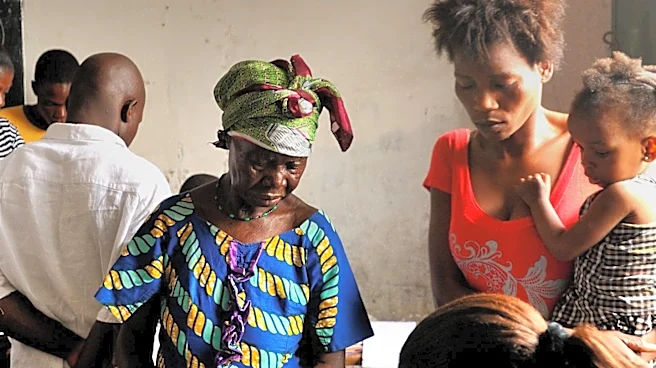
for many Liberian families. An HRW investigation conducted in late 2025 and early 2026 revealed that registration fees caused severe hardship, preventing many children from attending school or forcing them into child labor. Parents interviewed in four counties since the policy's implementation largely confirmed their awareness of the ban and their ability to enroll children without paying fees. One parent expressed, “The decision by the ministry is so good. It enables our children to go to school free without worry.” The policy has the potential to benefit nearly half a million families by helping children start and stay in school.
Why It's Important?
This policy is a crucial step towards making the right to education a reality for all children in Liberia, regardless of their financial circumstances. By eliminating registration fees, the government is directly addressing a key factor contributing to educational inequality and child labor. The ability for children to attend school without this financial burden can lead to improved literacy rates, better future economic opportunities, and a reduction in poverty cycles. It also aligns with international human rights standards that emphasize accessible education. The success of this policy could serve as a model for other developing nations facing similar challenges in providing universal education. However, ensuring compliance across all schools and addressing other costs like transportation, uniforms, and textbooks will be vital for its long-term effectiveness and impact.
What's Next?
The Liberian government is encouraged to monitor and enforce compliance with the fee ban across all schools to ensure its full impact. Additionally, HRW suggests extending the policy to junior and senior secondary schools to provide comprehensive educational access. Addressing other associated costs, such as transportation, uniforms, and textbooks, will be critical to further reduce barriers to education. Continued advocacy and oversight from organizations like Human Rights Watch will be important to ensure the policy's sustained implementation and to identify any new challenges that may arise. The long-term success of this initiative will depend on consistent government commitment and community engagement to support accessible education for all Liberian children.
Beyond the Headlines
The removal of school registration fees in Liberia highlights a broader global challenge of ensuring equitable access to education in low-income countries. Beyond the immediate financial relief, this policy can foster a more inclusive society by empowering marginalized communities through education. It underscores the idea that education is not merely a privilege but a fundamental human right, essential for individual development and national progress. The policy's success could also influence discussions around international aid and development strategies, emphasizing direct financial interventions that remove barriers to essential services. This move could also lead to a re-evaluation of educational funding models in other nations, promoting policies that prioritize accessibility over cost recovery, ultimately contributing to a more educated and resilient global population.