




What's Happening?
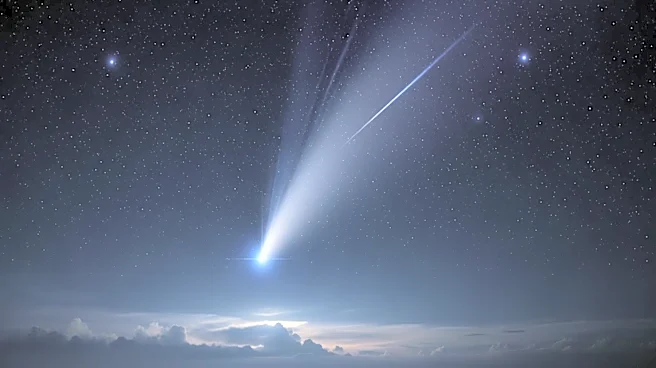
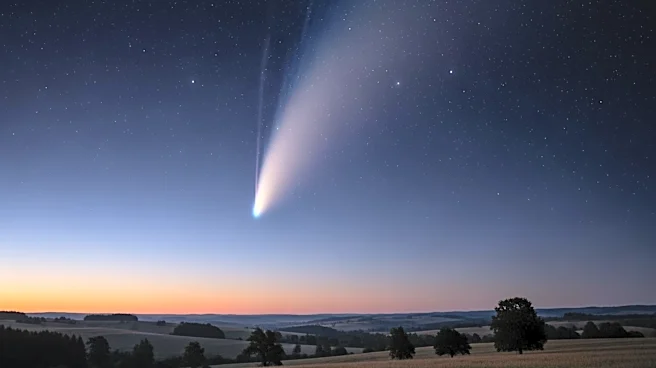
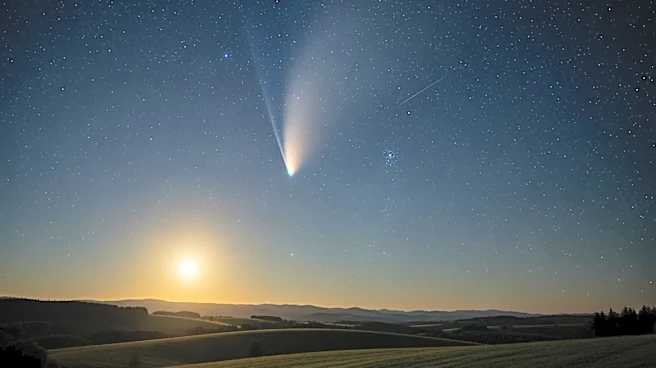
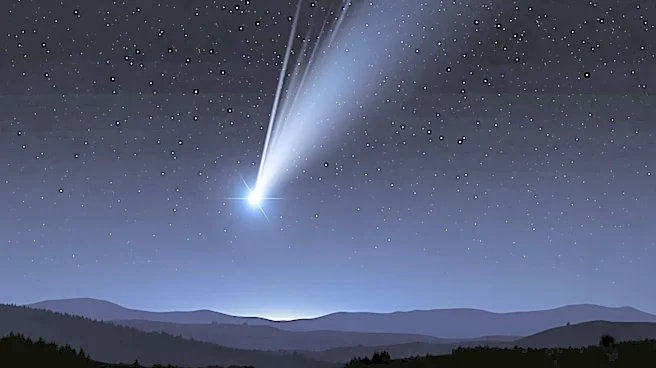
Comet C/2025 R3 (PanSTARRS) is currently visible in the skies, offering a rare viewing opportunity before it exits the solar system. Originating from the Oort Cloud, the comet is making its closest approach to the sun this week. Observers in India have
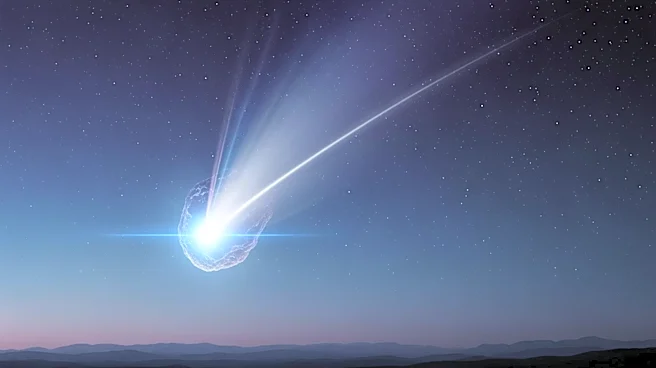
a window from April 17 to April 20 to view the comet, which is positioned near the Great Square of Pegasus. With a brightness magnitude of 4.6, it is on the verge of being visible to the naked eye under dark skies, though binoculars or telescopes are recommended for a clearer view. The comet's greenish coma and ion tail are notable features for observers.
Why It's Important?
The visibility of Comet PanSTARRS is a significant event for astronomers and the general public, as it provides a chance to witness a celestial body that will not return. Such events can enhance public interest in space and science, encouraging educational activities and scientific inquiry. The comet's journey offers insights into the dynamics of celestial bodies and the structure of the solar system. It also underscores the importance of astronomical research and the role of observatories in tracking and studying such phenomena.
What's Next?
After April 20, Comet PanSTARRS will become increasingly difficult to observe as it moves closer to the sun. Astronomers will continue to monitor its path and gather data until it is no longer visible. The event may spark renewed interest in other celestial phenomena, such as the anticipated return of Halley's Comet in 2061. Educational and scientific communities may leverage this interest to promote further engagement with astronomy and related fields.