
What's Happening?
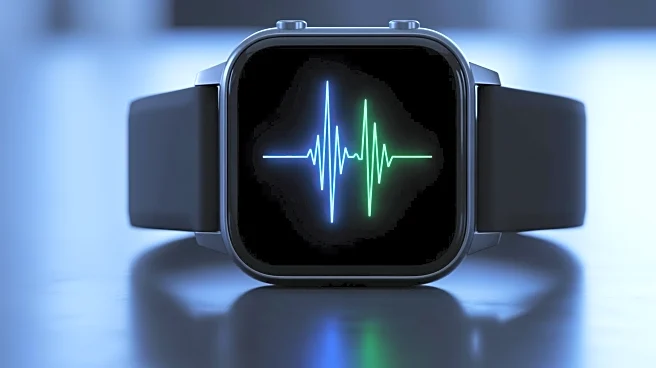
A study published in the Nature journal npj Biomedical Innovations reveals that smartwatches can accurately estimate a person's age using a 30-second electrocardiogram (ECG) reading. Conducted by Concordia
researchers, the study involved 220 participants aged 3 to 78 using a Fitbit Sense smartwatch. The researchers tested various machine-learning models, with the best results achieved by a feedforward neural network, predicting age with an average error of under three years. This method outperformed previous studies using hospital-grade ECGs. The technology offers a secure alternative to traditional age verification methods, as ECG data is harder to fake and can be processed anonymously.
Why It's Important?
The development of a privacy-friendly age verification tool using smartwatches could revolutionize how age-restricted services are accessed online. This method provides a more secure and private alternative to facial recognition or ID checks, addressing privacy concerns associated with current verification methods. The technology's ability to accurately estimate age could enhance security for online platforms, reducing the risk of underage access to restricted content. The study's findings highlight the potential of wearable technology in providing innovative solutions for privacy and security challenges.
What's Next?
Further research is needed to validate the findings with larger and more diverse samples. Collaboration with smartwatch manufacturers could facilitate the integration of this technology into consumer devices. The study's success may prompt further exploration of ECG-based applications in other areas, such as health monitoring and biometric security. As the technology develops, it could become a standard feature in smartwatches, offering users enhanced privacy and security in various digital interactions.