
What's Happening?
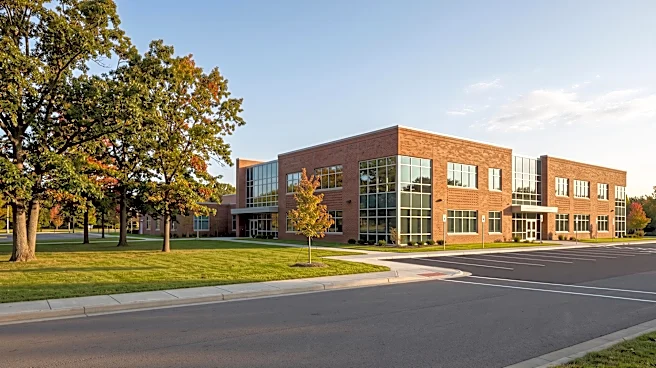
The Waukesha School District in Wisconsin has closed schools and downsized its buildings due to a continuous decline in student enrollment and birth rates. Bethesda Elementary School is among the facilities
closed this year to manage costs. Superintendent Jim Sebert noted that the district's student population has decreased significantly, from approximately 13,000 students in 2012-2013 to about 10,600 currently. A long-range planning process revealed a 25.5% loss in student population over a 20-year period, a trend expected to persist for the next decade. This decline has necessitated a 'right-sizing' of the district, leading to a reduction from 12 elementary schools to nine, and from three traditional middle schools to two. Sebert emphasized that this challenge is part of a broader national trend.
Why It's Important?
The declining student enrollment in the Waukesha School District highlights a significant demographic shift impacting educational institutions across the U.S. This trend has direct financial implications, as the district, described as a low-spending entity, relies on state aid and property taxes, and has reportedly lost $10.1 million in state aid over two years. The need to 'right-size' by closing schools and consolidating buildings affects communities by altering local infrastructure and potentially impacting property values and community identity. For parents like Joe Burke, the focus remains on student outcomes and how the district measures success during this transitional period. The situation underscores the broader challenge for public education systems to adapt to changing demographics while maintaining quality programs and financial stability.
What's Next?
Superintendent Jim Sebert is focused on managing the current challenges by paying off debts, saving taxpayer money on interest, and continuing to right-size the school district's infrastructure. The district aims to maintain high-quality programs for students and families despite the reduced number of facilities and students. The ongoing decline in student population is projected to continue for the next decade, suggesting that further adjustments and strategic planning will be necessary. The district's financial model, which relies on state aid and property taxes, is also under scrutiny, with Sebert indicating a need for potential fixes to the funding formula. The long-term implications will involve continuous monitoring of student outcomes and adapting educational strategies to a smaller student body.
Beyond the Headlines
The situation in Waukesha reflects a deeper societal trend of declining birth rates and shifting demographics that could have profound long-term effects on local economies and social structures across the U.S. As school districts consolidate or close, the ripple effects can extend to local businesses, community services, and the overall vibrancy of neighborhoods. The ethical dimension involves ensuring equitable access to quality education for all students, even as resources shrink and facilities are consolidated. Culturally, the closure of community schools can erode local identity and historical ties. This trend also raises questions about the sustainability of current public education funding models and the need for innovative solutions to support educational excellence in an era of demographic change.