
What's Happening?
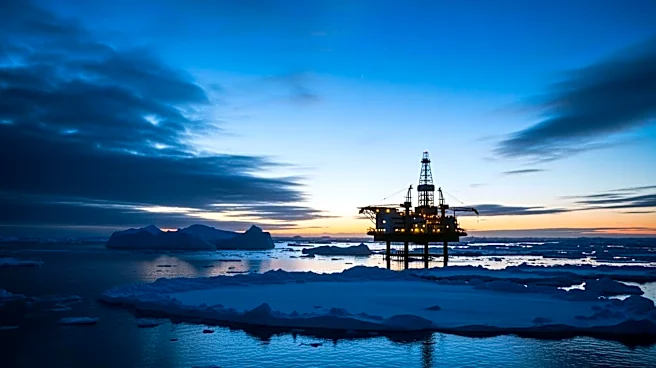
Greenland is emerging as a potential frontier for oil and gas exploration, driven by global supply fragmentation and geopolitical shifts. The Jameson Land Basin in Greenland is estimated to hold over 13
billion barrels of prospective oil, making it a significant undeveloped resource. The East Greenland Rift system is also considered a major hydrocarbon province. Improved Arctic accessibility and geopolitical factors are attracting interest and investment in Greenland's oil and gas potential. New exploration companies are forming, and drilling campaigns are being planned, although challenges such as harsh operating conditions and lack of infrastructure remain.
Why It's Important?
Greenland's potential as an oil and gas producer could play a crucial role in diversifying global energy supply, especially as traditional sources face geopolitical risks. The region's development could enhance energy security by providing access to stable, Western-aligned resources. However, the challenges of infrastructure development and environmental concerns must be addressed to realize this potential. The interest in Greenland reflects a broader trend of seeking new energy frontiers amid global supply uncertainties, which could have significant implications for energy markets and geopolitical dynamics.
Beyond the Headlines
The exploration of Greenland's oil and gas resources raises important environmental and political considerations. The Arctic's fragile ecosystem and the political sensitivity surrounding its development could influence the pace and scale of exploration activities. Additionally, Greenland's journey from a frontier to a viable energy producer will depend on overcoming logistical and technical challenges. The long-term value of Greenland's resources lies in its potential to contribute to energy diversification and security, even if production timelines remain uncertain.