



What's Happening?
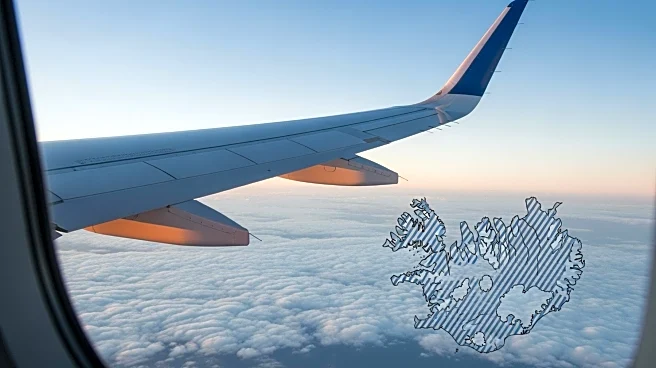
Air travel in Iceland has been significantly disrupted due to strong winds associated with a passing storm, leading to flight cancellations and delays at Keflavík Airport. According to reports, Icelandair had to cancel three morning departures to Amsterdam,
Paris, and Helsinki, while at least ten additional international flights were delayed until around midday. Despite these disruptions, domestic flights within Iceland, including services between Akureyri and international destinations, are operating as scheduled. The Icelandic Meteorological Office has issued yellow weather warnings across several regions, including South Iceland, Breiðafjörður, the Westfjords, Strandir, and the Central Highlands, with alerts expected to remain in place until 16:00 local time. Conditions are anticipated to improve by tomorrow, with forecasts predicting lighter winds and sleet or hail in many areas.
Why It's Important?
The flight disruptions at Keflavík Airport highlight the vulnerability of air travel to adverse weather conditions, which can have significant impacts on international connectivity and tourism. Iceland, known for its natural beauty and unique attractions, relies heavily on air travel to support its tourism industry, which is a vital component of the national economy. The cancellations and delays may affect travelers' plans and could lead to economic repercussions for businesses dependent on tourism. Additionally, the issuance of yellow weather warnings underscores the importance of preparedness and adaptability in the face of unpredictable weather patterns, which are becoming increasingly common due to climate change.
What's Next?
As the storm passes, conditions are expected to improve, allowing for the resumption of normal flight operations. Travelers affected by the cancellations and delays may need to reschedule their plans, and airlines will likely work to accommodate passengers on alternative flights. The Icelandic Meteorological Office will continue to monitor weather conditions and update warnings as necessary. In the longer term, stakeholders in the tourism and aviation sectors may consider strategies to mitigate the impact of similar disruptions in the future, such as enhancing infrastructure resilience and improving communication with travelers.
Beyond the Headlines
The disruption caused by the storm at Keflavík Airport may prompt discussions on the broader implications of climate change on aviation and tourism. As extreme weather events become more frequent, there is a growing need for industries to adapt to changing conditions. This could involve investing in more robust infrastructure, developing contingency plans, and exploring sustainable practices to reduce environmental impact. Additionally, the situation highlights the importance of effective communication and coordination between meteorological services, airlines, and travelers to ensure safety and minimize inconvenience.