






What's Happening?
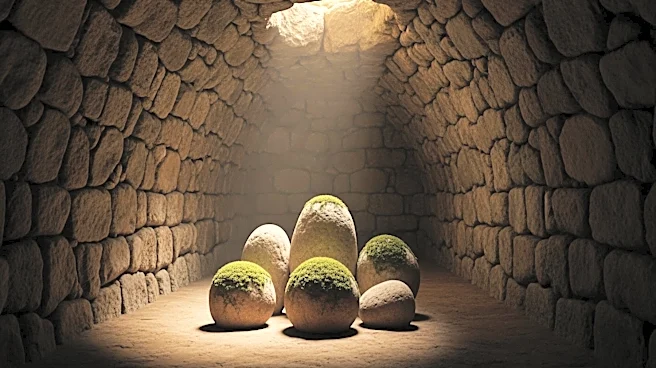
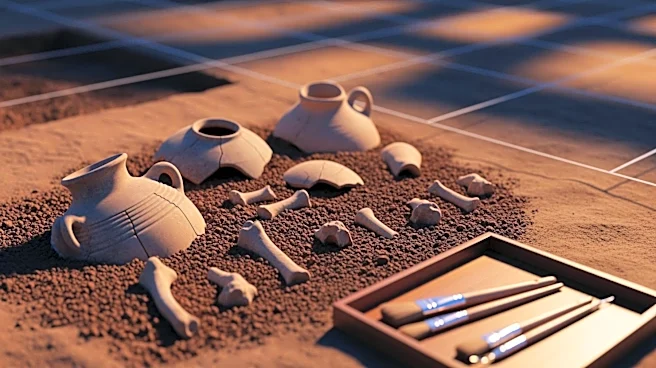
Archaeologists at Tel Azekah, an ancient site in Israel, have uncovered a mass grave containing the remains of up to 89 children, primarily infants and young children, dating back 2,500 years to the early Persian period. The discovery was made in a repurposed
water cistern and provides insight into ancient burial practices and infant mortality rates. The site, originally a water reservoir, was used as a burial space for infants who had not yet been weaned, suggesting that these children were not granted individual interments due to their young age and high mortality rates. The findings indicate that infants who died before weaning were not considered to have achieved full social status, thus not receiving separate burials.
Why It's Important?
This discovery is significant as it fills a gap in the archaeological record regarding burial practices for infants during the Persian period in the Southern Levant. It offers a rare glimpse into how ancient societies viewed infancy and personhood, suggesting that a child's integration into the community was tied to surviving early years and transitioning to solid food. The mass grave contrasts with adult burials of the time, which were typically individual interments, highlighting societal norms and the quiet grief of communities dealing with high infant mortality. This find contributes to understanding historical demographic patterns and social structures.
What's Next?
The discovery at Tel Azekah may prompt further archaeological investigations into burial practices for infants in other ancient sites, potentially revealing more about societal norms and mortality rates in historical contexts. Researchers may continue to analyze the remains and associated grave goods to gain deeper insights into the cultural and social aspects of the period. The findings could also lead to comparative studies with similar sites, such as the child cemetery on the island of Astypalaia in Greece, to understand broader regional practices.
Beyond the Headlines
The emotional impact of the discovery highlights the challenges faced by archaeologists when dealing with sensitive topics such as infant mortality. The site provides a testament to the everyday realities and social norms of ancient communities, offering a profound understanding of how they coped with loss and integrated children into their societies. The presence of modest grave goods suggests that while the infants were not given individual graves, they were buried with care, reflecting the cultural significance of burial practices even for the youngest members of society.