








What's Happening?
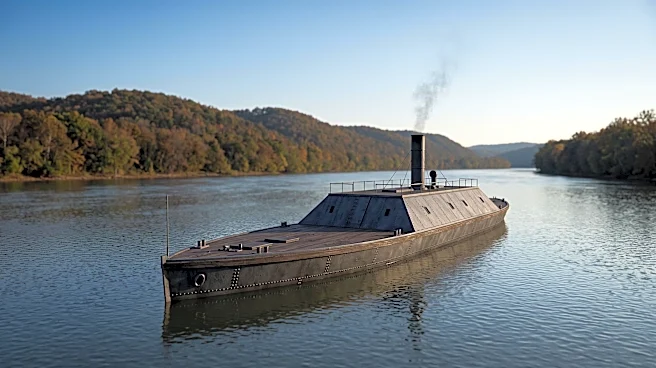
During the American Civil War, Rear Adm. Samuel Phillips Lee, a cousin of Confederate Gen. Robert E. Lee, played a pivotal role in the Union Navy's operations, particularly during Confederate Lt. Gen. John Bell Hood's Tennessee Campaign in late 1864.
Transferred to command the Mississippi Squadron in October 1864, Lee directed naval operations across the western river system, including the Mississippi, Cumberland, and Tennessee Rivers. As Hood's army advanced towards Nashville, Lee's vessels were instrumental in keeping the strategically vital Cumberland River open for Union traffic. This ensured the continuous flow of supplies, reinforcements, and communications to Union Maj. Gen. George H. Thomas's forces. Lee's squadron also actively countered Confederate attempts to disrupt navigation and interfere with Union movements along the Cumberland River, providing crucial naval support through the decisive Battle of Nashville in December 1864, where Thomas's forces ultimately defeated Hood's Army of Tennessee.
Why It's Important?
The actions of Rear Adm. Samuel Phillips Lee and the Union Navy during Hood's Tennessee Campaign were critical to the Union's strategic success in the Western Theater of the Civil War. Maintaining control of the Cumberland River was not merely a tactical advantage; it was a logistical lifeline that directly impacted the Union Army's ability to sustain its operations. Without the secure passage of supplies and reinforcements, Maj. Gen. George H. Thomas's forces would have faced severe challenges in confronting and ultimately defeating Hood's Confederate army. This highlights the often-underestimated importance of naval power in inland waterways during the Civil War, demonstrating how control over rivers could dictate the pace and outcome of land campaigns. Lee's commitment to the Union, despite his Southern heritage and familial ties to prominent Confederates, also underscores the complex loyalties and divisions within American society during this period, showcasing individuals who prioritized national unity over regional allegiance.
What's Next?
While the immediate conflict of the Civil War concluded with the Union victory, the historical account of Rear Adm. Samuel Phillips Lee's contributions continues to be studied and recognized. His post-war career saw him revert to his permanent rank of captain, serving on various boards and eventually commanding the North Atlantic Squadron before retiring as a rear admiral in 1873. His legacy is preserved through two U.S. Navy vessels named in his honor, USS S. P. Lee (DD-310) and USNS S. P. Lee (T-AGS-31). Future historical analyses and educational programs will likely continue to explore the intricate details of naval logistics and leadership during the Civil War, further illuminating the impact of figures like Lee on the broader conflict and the eventual reunification of the United States. The strategic lessons learned from maintaining riverine supply lines remain relevant in military planning and logistics.
Beyond the Headlines
The story of Samuel Phillips Lee extends beyond military strategy, touching upon profound themes of loyalty, duty, and national identity during a period of immense national division. His decision to remain loyal to the Union, despite being a Virginian and a cousin to Robert E. Lee, exemplifies the personal sacrifices and difficult choices many Americans faced. This narrative challenges simplistic interpretations of the Civil War as a clear-cut North-South divide, revealing the internal conflicts and diverse allegiances that existed even within prominent families. Furthermore, Lee's career, marked by significant contributions to naval exploration and oceanography before the war, highlights the multifaceted roles of military officers in 19th-century America. His life serves as a testament to the complex interplay of personal conviction, professional duty, and the evolving definition of American nationhood during a foundational period in U.S. history.