



What's Happening?
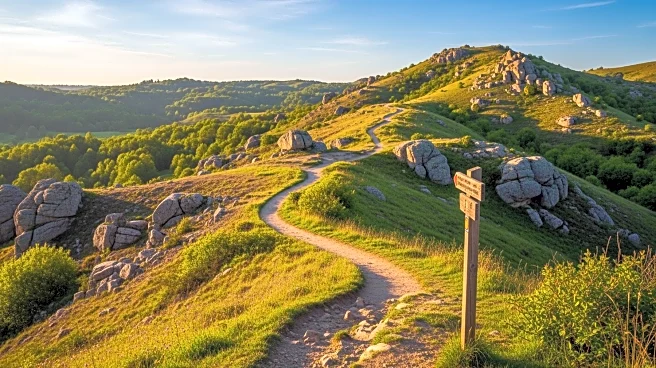
The Israel National Trail, spanning the entire length of Israel, offers a diverse hiking experience through forests, rivers, deserts, and coastlines. Recognized by National Geographic as one of the world's top 20 hiking trails, it covers approximately
1,080 kilometers and is divided into 56 segments. The trail is marked in white, blue, and orange, allowing hikers to explore it in sections or as a continuous journey. Key highlights include Mount Meron, Nahal Amud Reserve, and Arbel cliffs, each offering unique natural and historical features. The trail is accessible year-round, with certain sections requiring reservations through the Israel Nature and Parks Authority.
Why It's Important?
The Israel National Trail is significant for its blend of natural beauty, historical sites, and cultural heritage, attracting both local and international hikers. It provides an opportunity for outdoor recreation and education, promoting physical health and environmental awareness. The trail supports local economies by drawing tourists to various regions, encouraging the preservation of natural and historical sites. Additionally, it fosters a connection to the land's history, with sites like the Arbel Fortress and ancient aqueducts offering insights into past civilizations.
What's Next?
As the trail continues to gain recognition, efforts to maintain and enhance its accessibility and safety are likely to increase. This may involve further collaboration with the Israel Nature and Parks Authority to manage visitor numbers and preserve the trail's natural and historical integrity. Future developments could include improved infrastructure, such as signage and rest areas, to accommodate growing interest. Additionally, educational programs and guided tours may be expanded to enrich the hiking experience and promote sustainable tourism practices.
Beyond the Headlines
The Israel National Trail not only offers a physical journey but also a cultural and historical exploration. It serves as a living museum, where hikers can learn about the region's diverse ecosystems and historical narratives. The trail's preservation efforts highlight the importance of balancing tourism with conservation, ensuring that future generations can enjoy and learn from this unique landscape. Moreover, the trail's role in promoting outdoor activities aligns with global trends towards health and wellness, emphasizing the benefits of nature-based recreation.