







What's Happening?
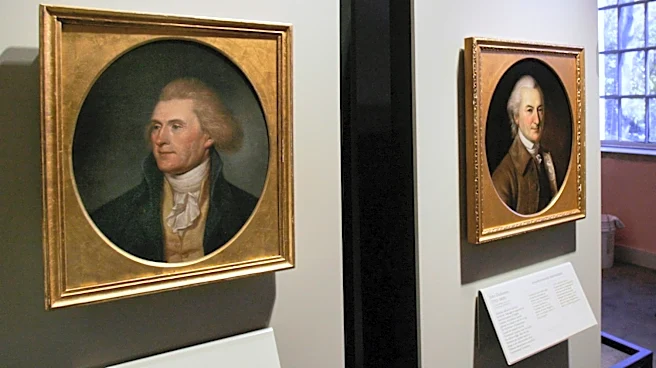
As the United States approaches the 250th anniversary of its independence, the legacy of John Dickinson, a key figure in the Revolutionary War era, is being re-evaluated. Dickinson, known as the 'Penman of the Revolution,' was a prominent lawyer and statesman
who famously abstained from signing the Declaration of Independence. His decision was rooted in a belief that independence should be achieved gradually and without bloodshed. Despite his significant contributions, including drafting the Olive Branch Petition and the Articles of Confederation, Dickinson's reputation has been overshadowed by his reluctance to sign the Declaration. Scholars like Jane Calvert are working to highlight his contributions and challenge the negative perceptions that have persisted over time.
Why It's Important?
Revisiting John Dickinson's legacy is crucial for understanding the complexities of the American Revolution and the diverse perspectives of its leaders. Dickinson's emphasis on legal protections and gradual independence reflects a nuanced approach to governance that contrasts with the more militant stances of his contemporaries. This re-evaluation can provide a more comprehensive view of the founding era, highlighting the importance of debate and dissent in shaping the nation's history. It also underscores the need to recognize contributions that may not align with popular narratives but are nonetheless vital to the country's development.