








What's Happening?
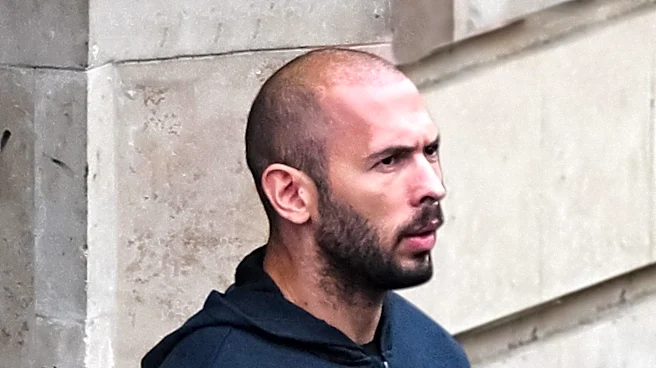
Andrew Tate, a self-styled influencer known for his controversial views, was reported to have visited Russia alongside his brother. During their visit, they were seen engaging with the Russian military, including activities such as firing weapons and
riding in a tank. This visit coincided with that of Tommy Robinson, a far-right activist from the UK, who was also in Russia at the same time. The trips have raised questions about the connections between far-right figures and Russia, especially given the geopolitical tensions and the Kremlin's alleged interest in forging ties with European far-right groups. The Musk Foundation, a philanthropic organization founded by Elon Musk and his brother, reportedly funded Robinson's trip, further complicating the narrative around these visits.
Why It's Important?
The presence of Andrew Tate and Tommy Robinson in Russia highlights potential efforts by the Kremlin to build alliances with far-right figures in Europe. This development is significant as it underscores the ongoing geopolitical strategies that involve influencing political landscapes in Western countries. The involvement of the Musk Foundation in funding Robinson's trip adds another layer of complexity, suggesting that influential figures and organizations may be indirectly supporting these connections. This situation could have implications for international relations, particularly between Russia and Western nations, as it raises concerns about foreign interference and the spread of extremist ideologies.
What's Next?
The visits by Andrew Tate and Tommy Robinson to Russia may prompt further scrutiny from Western governments and intelligence agencies. There could be increased efforts to monitor and counteract any potential influence operations by Russia aimed at destabilizing democratic institutions in Europe and the U.S. Additionally, the involvement of high-profile figures and organizations in these activities might lead to calls for greater transparency and accountability regarding their international engagements. Policymakers may also consider implementing measures to safeguard against foreign interference and the spread of extremist ideologies.
Beyond the Headlines
The visits of far-right figures to Russia could have long-term implications for the cultural and political landscape in Europe and the U.S. The potential normalization of such connections might embolden other extremist groups to seek similar alliances, thereby increasing the risk of radicalization and political polarization. Furthermore, the involvement of influential organizations in these activities raises ethical questions about the responsibilities of private entities in international politics. This situation could lead to a broader debate about the role of philanthropy and corporate influence in shaping global political dynamics.