
What's Happening?
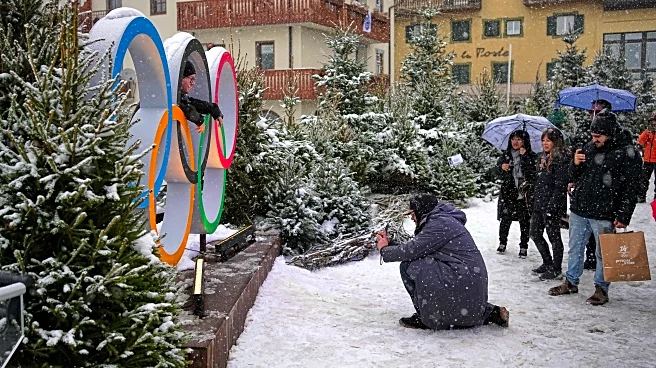
A wildlife photographer has uncovered a significant paleontological find near the 2026 Milan Cortina Winter Olympic venue in Italy. The discovery, made by Elio Della Ferrera in the Stelvio National Park,
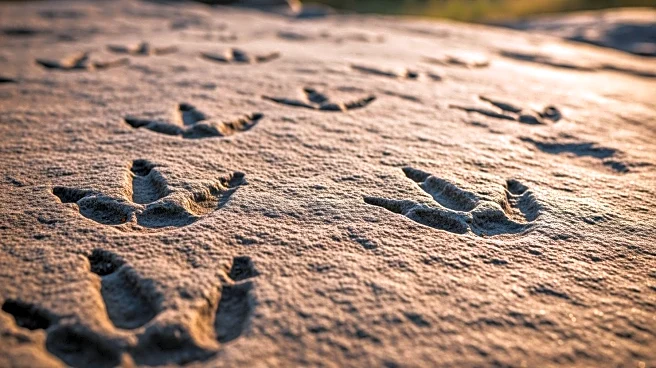
consists of approximately 20,000 dinosaur footprints dating back to the Triassic Period, around 210 million years ago. These tracks, found near the Swiss border, are believed to have been made by long-necked bipedal herbivores similar to Plateosaurus, which could grow up to 10 meters long and weigh up to four tons. The footprints, some measuring 40 centimeters wide, suggest that these dinosaurs traveled in packs and occasionally stopped in circular formations, possibly for protection. The site is located at a high altitude, making the footprints difficult to spot without specialized equipment.
Why It's Important?
This discovery is significant as it provides valuable insights into the behavior and movement patterns of dinosaurs during the Triassic Period. The sheer number of footprints offers a rare opportunity for paleontologists to study the social behavior of these ancient creatures, potentially revealing new information about their group dynamics and environmental interactions. Additionally, the find enhances the cultural and scientific value of the region, potentially attracting researchers and tourists interested in paleontology. The proximity of the site to the upcoming Winter Olympics venue adds a unique historical dimension to the event, highlighting the region's rich prehistoric past.
What's Next?
While the site is currently too remote for public access, especially during winter, there may be future plans to make it accessible to researchers and tourists. The discovery could lead to further exploration and excavation in the area, potentially uncovering more fossils or tracks. Local authorities and scientists might collaborate to preserve the site and develop educational programs to share this significant find with a broader audience. The discovery could also inspire additional research into similar geological formations in the region, potentially leading to more paleontological breakthroughs.