





What's Happening?
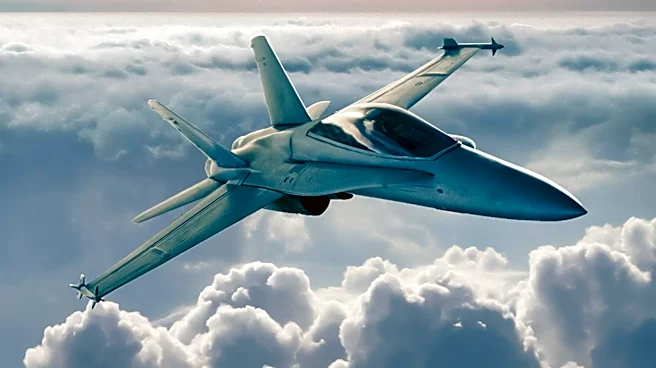
General Dynamics' F-16 Fighting Falcon emerged from the U.S. Air Force's Lightweight Fighter program in 1972, designed to create a cost-effective, agile dogfighter. The F-16, known for its fly-by-wire technology, beat the Northrop YF-17 in a 1975 competition,
leading to its production in 1978. The aircraft's design includes relaxed static stability, allowing for superior maneuverability, controlled by a flight-control computer. Over the years, the F-16 has evolved through various upgrades, from a lightweight fighter to a precision bomber and nuclear-strike platform. With over 4,600 units built, it remains the most produced Western fighter of its generation.
Why It's Important?
The F-16's development marked a significant shift in military aviation, emphasizing affordability and agility over size and cost. This approach allowed numerous countries to maintain substantial fleets, enhancing global defense capabilities. The aircraft's continued evolution and widespread use underscore its adaptability and enduring relevance in modern warfare. Its success has influenced military procurement strategies, prioritizing cost-effective solutions without compromising performance. The F-16's legacy also highlights the importance of technological innovation in maintaining air superiority.