




What's Happening?
A recently unearthed 1976 conversation between psychologist Rollo May and Daniel Ellsberg, author of the Pentagon Papers, sheds light on Ellsberg's background and the context of his actions. Ellsberg, a former Marine and Harvard-trained economist, worked
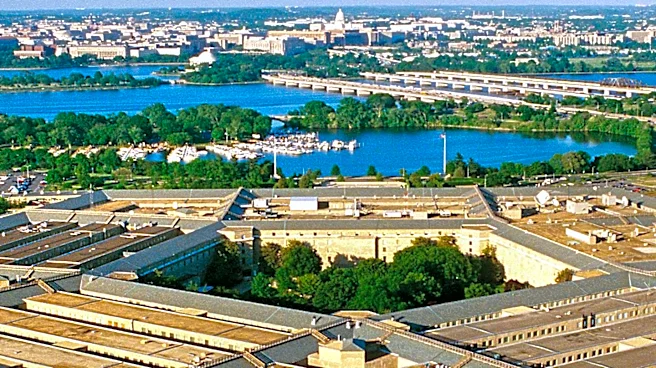
as a strategic analyst at the RAND Corporation. In this role, he was involved in shaping nuclear war planning and American policy in Vietnam. He gained significant prominence in 1971 when he provided the classified history of American involvement in the Vietnam War, known as the Pentagon Papers, to the press. This act led to charges that carried a potential sentence of 115 years, though the case was ultimately dismissed in 1973 due to government misconduct. The discussion between May and Ellsberg, recorded shortly after the Vietnam War concluded, focused on themes of good and evil.
Why It's Important?
Daniel Ellsberg's tenure at the RAND Corporation and his subsequent release of the Pentagon Papers represent a pivotal moment in U.S. history, profoundly impacting public perception of government transparency and accountability. His work as a strategic analyst provided him with an intimate understanding of the decision-making processes behind U.S. foreign policy, particularly concerning the Vietnam War. The Pentagon Papers exposed discrepancies between official government statements and the actual conduct of the war, leading to widespread public distrust and fueling anti-war sentiment. This event underscored the power of classified information and the ethical dilemmas faced by individuals with access to such data. It also highlighted the role of think tanks like the RAND Corporation in shaping national policy and the potential for internal dissent to challenge established narratives, ultimately influencing future debates on national security and freedom of the press.
What's Next?
While the event itself is historical, the themes discussed by Ellsberg and May—good and evil, courage, and the implications of government actions—remain highly relevant. The legacy of the Pentagon Papers continues to influence discussions on whistleblowing, government secrecy, and the public's right to information. Future analyses of this conversation and Ellsberg's work will likely continue to explore the ethical responsibilities of individuals within powerful institutions and the balance between national security interests and democratic transparency. The historical context provided by such archives offers valuable insights for contemporary debates on intelligence, foreign policy, and the role of the media in holding power accountable. The ongoing relevance of these discussions suggests that Ellsberg's actions and the questions they raised will continue to be examined in the context of modern challenges.
Beyond the Headlines
The deeper implications of Ellsberg's actions and his discussion with May extend to the very nature of institutional loyalty versus moral imperative. Ellsberg's decision to leak the Pentagon Papers was not merely a political act but a profound ethical choice, challenging the established norms of secrecy and obedience within the national security apparatus. This event sparked a national conversation about the limits of executive power and the importance of an informed citizenry in a democracy. It also highlighted the psychological toll and personal risks associated with such acts of conscience. The conversation between May, a pioneer in existential psychology, and Ellsberg likely delved into the personal and philosophical underpinnings of such a momentous decision, exploring themes of individual responsibility, courage, and the struggle against institutional inertia. This historical episode continues to serve as a case study for understanding the complex interplay between individual ethics, governmental power, and societal change.