
What's Happening?
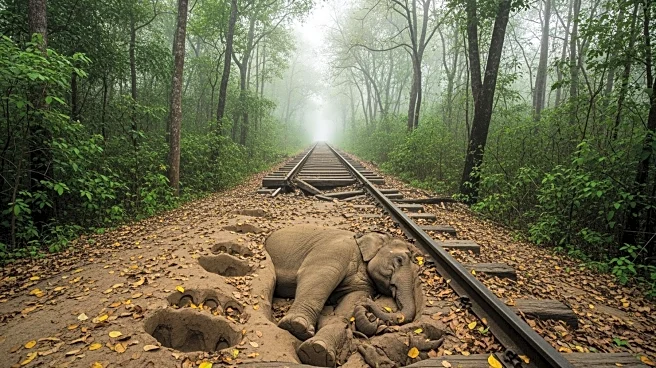
A high-speed passenger train in Assam, India, struck a herd of wild Asiatic elephants, resulting in the death of seven elephants and injury to a calf. The incident took place early Saturday as the train,
en route from Sairang in Mizoram to New Delhi, encountered the elephants crossing the tracks. Despite the train driver's efforts to stop, the collision occurred, leading to the derailment of five coaches and the engine. Fortunately, no human injuries were reported. The accident site, located in a forested area southeast of Guwahati, is not officially recognized as an elephant corridor, although elephants frequently traverse the region. The Rajdhani Express train, carrying 650 passengers, resumed its journey after unaffected coaches were separated, and passengers from the derailed coaches were transferred to another train.
Why It's Important?
This incident underscores the ongoing challenges of balancing infrastructure development with wildlife conservation in regions like Assam, which hosts a large population of wild Asiatic elephants. The frequent occurrence of such accidents highlights the need for improved safety measures to protect both wildlife and human passengers. The event may prompt Indian Railways and conservationists to reevaluate current practices and consider implementing new technologies or rerouting tracks to prevent future collisions. The incident also raises awareness about the broader issue of human-wildlife conflict and the importance of sustainable development practices.
What's Next?
Following this incident, Indian Railways and local authorities are likely to investigate the circumstances and explore preventive measures. Conservationists may push for the creation of more designated elephant corridors and the use of technology to detect wildlife near railway tracks. There could be increased collaboration between railway authorities and wildlife experts to develop strategies that ensure the safety of both animals and passengers. Public awareness and advocacy for wildlife protection in areas with significant human infrastructure may also increase as a result of this event.