


What's Happening?
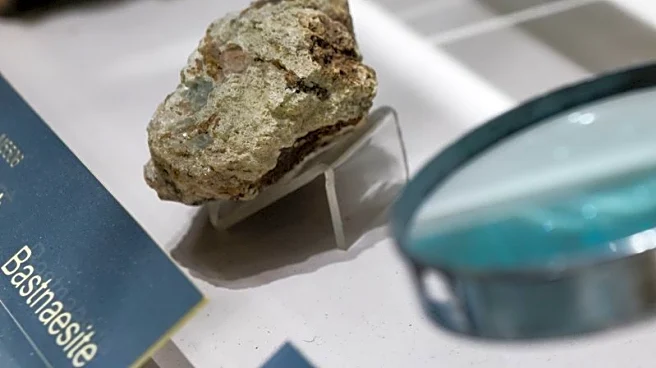
In October 2025, Pakistan shipped its first load of rare earth minerals to the United States as part of a new $500 million agreement between the two nations. This deal aims to strengthen the resilience of vulnerable supply chains by providing the U.S.
with critical minerals. Despite Pakistan's extensive reserves, the country faces significant challenges in accessing and profiting from these resources. The agreement includes a three-step plan to scale up mining projects by 2028, but Pakistan's outdated technology and complex regulatory framework pose obstacles to realizing the full potential of its mineral wealth.
Why It's Important?
The US-Pakistan rare earths deal is crucial for the United States as it seeks to diversify its mineral supply sources amid global tensions, particularly with China. Rare earth minerals are essential for various sectors, including green energy, defense, and technology. However, Pakistan's ability to deliver on its promises is uncertain due to its economic challenges and lack of infrastructure. The deal also serves as a strategic signal to China, indicating that the U.S. is exploring alternative sources for critical minerals, potentially impacting geopolitical dynamics.
Beyond the Headlines
The deal highlights the broader geopolitical implications of mineral supply chains, as the U.S. attempts to reduce its dependence on China for rare earth minerals. Pakistan's mineral reserves, while promising, require significant investment and development to become viable sources. The agreement may also exacerbate tensions between China and Pakistan, given China's substantial investments in Pakistan's infrastructure. Additionally, the environmental and social impacts of mining in regions like Balochistan could pose further challenges to the successful implementation of the deal.