






What's Happening?
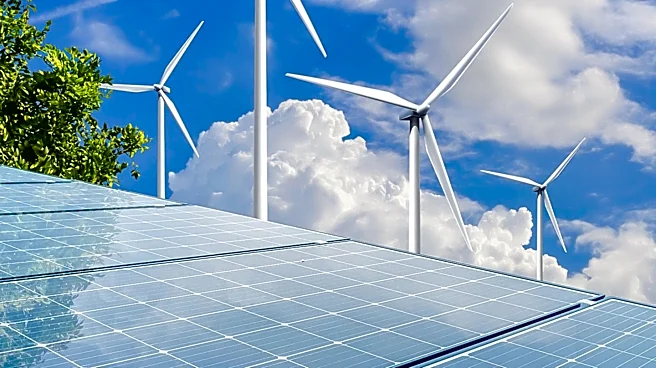
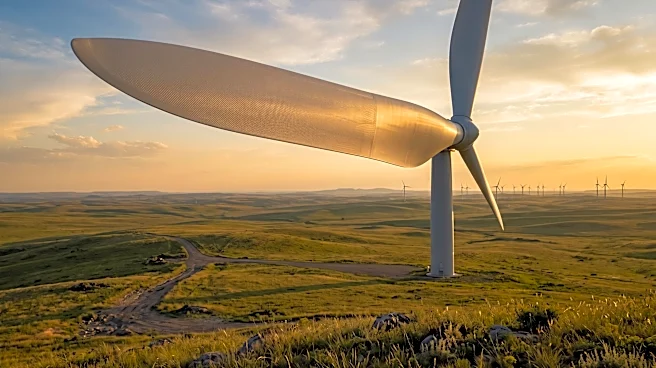
South Dakota's Board of Economic Development has authorized tax rebates totaling up to $6.1 million for the state's largest wind energy project. This $750 million, 333-megawatt wind farm is being developed by Philip Wind Partners, a subsidiary of Chicago-based
Invenergy. The project will cover approximately 110 square miles of private land north of Philip, 85 miles east of Rapid City. State regulators approved the permit for the facility on February 12, and construction has already commenced. The wind farm is projected to feature up to 87 turbines and 5.5 miles of electrical transmission line, with an anticipated operational date in 2028. The rebates are provided through the state’s Reinvestment Payment Program, which supports building projects exceeding $20 million or equipment upgrades over $2 million by offering sales tax rebates.
Why It's Important?
This approval signifies a substantial investment in renewable energy infrastructure within South Dakota, positioning the state to enhance its energy independence and contribute to national clean energy goals. The project is expected to generate approximately 200 construction jobs and 12 long-term positions, providing economic benefits to the region. Over the next three decades, the wind farm is projected to contribute significantly to the local and state economies, with an estimated $85 million paid to landowners, $50 million in property taxes, and an additional $10 million in other state and local taxes. This financial injection will support local communities and public services. Furthermore, the project's scale underscores a growing trend in large-scale renewable energy development across the U.S., driven by both environmental considerations and economic incentives.
What's Next?
With construction already underway, the next phase involves the continued development and installation of the wind turbines and transmission lines. The project is slated to become operational in 2028, at which point it will begin generating electricity and contributing to the state's power grid. The economic benefits, including job creation and tax revenues, will materialize as the project progresses and becomes fully operational. The success of this large-scale wind farm could also influence future renewable energy investments and policy decisions in South Dakota and potentially serve as a model for other states considering similar initiatives. Monitoring the project's environmental impact and its integration into the existing energy infrastructure will be crucial as it moves towards completion.
Beyond the Headlines
The approval of such a significant wind energy project highlights the complex interplay between economic development, environmental policy, and local community interests. While the project promises substantial economic benefits and a move towards cleaner energy, it also raises questions about land use, visual impact, and potential effects on local ecosystems. The Reinvestment Payment Program, by offering tax rebates, demonstrates a strategic approach by the state government to incentivize large-scale industrial development, particularly in the renewable energy sector. This approach reflects a broader national trend where states are leveraging financial incentives to attract investments that align with their economic and environmental objectives, balancing the need for growth with sustainable practices. The long-term success and community acceptance of this project could set a precedent for future large-scale infrastructure developments in rural areas.