





What's Happening?
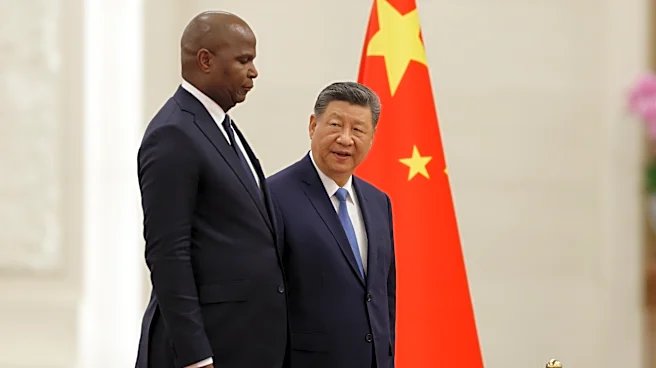
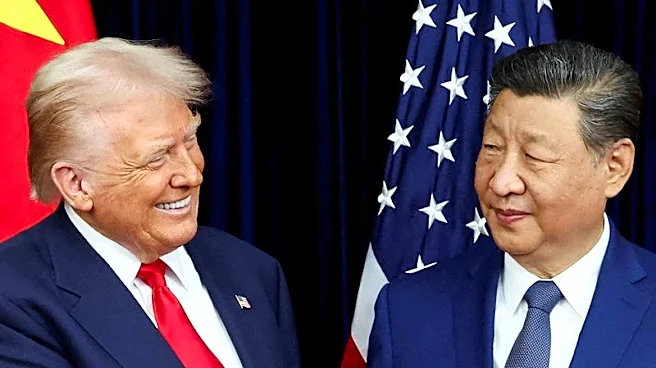
China's Foreign Minister Wang Yi has urged the United States to maintain stability in bilateral relations, emphasizing that Taiwan remains the most significant risk in China-U.S. relations. This statement comes ahead of President Trump's scheduled visit
to Beijing on May 14-15, 2026, where he is expected to meet with President Xi Jinping. The call between Wang and U.S. Secretary of State Marco Rubio also touched on the Middle East situation, although details were sparse. The dialogue aims to prepare for high-level interactions and expand cooperation while managing differences, particularly concerning Taiwan, which China views as a core interest.
Why It's Important?
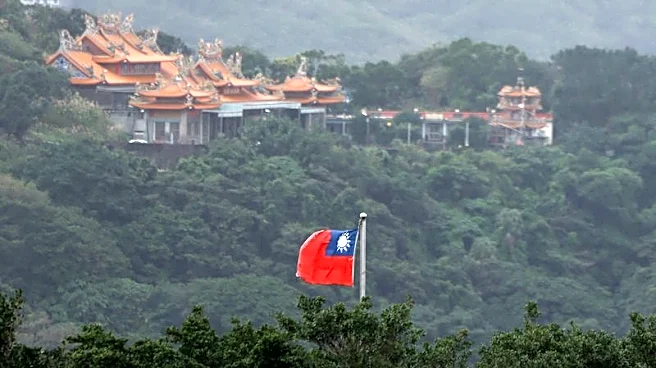
The warning from China highlights the ongoing tensions surrounding Taiwan, a critical issue in China-U.S. relations. The U.S.'s military support for Taiwan and its international backing of Taipei are points of contention for Beijing, which claims Taiwan as part of its territory. President Trump's visit to China could either ease or exacerbate these tensions, depending on the diplomatic outcomes. The situation underscores the delicate balance of power in the Asia-Pacific region and the potential for significant geopolitical shifts based on U.S. foreign policy decisions.
What's Next?
President Trump's upcoming visit to Beijing will be closely watched for any developments regarding Taiwan and other bilateral issues. Both nations are likely to engage in strategic discussions to manage their differences and explore areas of cooperation. The outcome of these talks could influence future U.S.-China relations and impact regional stability. Observers will be keen to see if any agreements or compromises are reached, particularly concerning Taiwan, which remains a contentious issue.