
What's Happening?
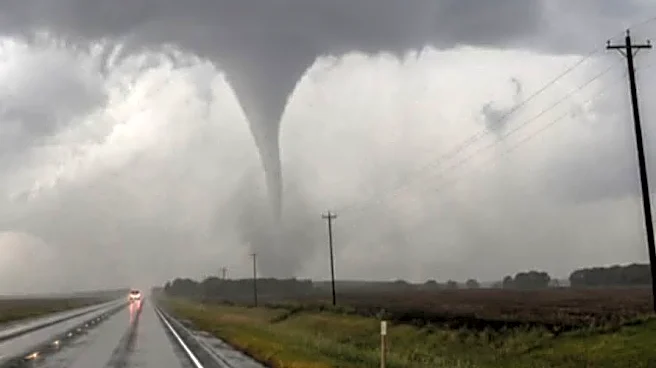
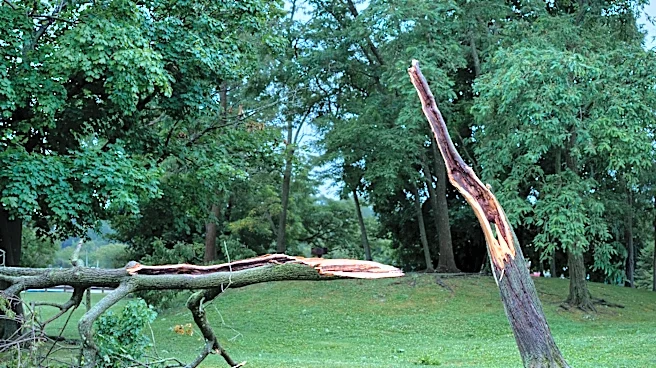
A microburst struck Lewis County, New York, last Friday afternoon, causing substantial damage and minor injuries. The National Weather Service confirmed the microburst, which particularly impacted the Lake Bonaparte Marina and Campground. During the violent
storm, a tree fell onto an RV, injuring a family of four who were subsequently transported to the hospital with minor injuries. The storm also caused significant damage to the marina, moving a dock upstream and displacing several boats. Taylor Hall, manager of Lake Bonaparte Marina and Campground, described the event as sudden and unexpected. The community has rallied together in the aftermath, with many offering assistance to those affected. Repairs to the damaged dock are estimated to cost around $10,000, and Hall hopes to have the docks operational again soon, as the season is nearing its end.
Why It's Important?
This event highlights the increasing frequency and intensity of localized extreme weather phenomena, such as microbursts, which can cause significant damage and pose immediate threats to public safety. For communities like those in Lewis County, such events can lead to substantial property loss, disruption of local businesses, and potential injuries. The estimated $10,000 in repair costs for the marina's dock alone indicates the economic impact on small businesses and recreational areas. The incident also underscores the importance of community resilience and preparedness in the face of unpredictable weather patterns. As climate patterns continue to shift, understanding and mitigating the risks associated with microbursts and similar severe weather events becomes crucial for local governments, emergency services, and residents across the U.S. to protect lives and infrastructure.
What's Next?
In the immediate future, efforts will focus on repairing the damaged dock at Lake Bonaparte Marina and Campground, with manager Taylor Hall aiming for completion before the end of the season. The family injured in the RV incident will continue their recovery from minor injuries. Local authorities and weather services will likely continue to monitor weather patterns closely, and emergency response teams will remain prepared for future severe weather events. The incident may also prompt local residents and businesses to review and update their emergency preparedness plans and insurance coverage for weather-related damages. Discussions might arise within the community and local government about infrastructure improvements to withstand such events, and public awareness campaigns on microburst safety could be initiated.
Beyond the Headlines
The microburst in Lewis County serves as a stark reminder of the localized yet powerful impacts of severe weather, often overshadowed by larger-scale natural disasters. While not as widespread as hurricanes or tornadoes, microbursts can deliver comparable destructive force within their concentrated areas, posing unique challenges for forecasting and preparedness. This event also subtly highlights the vulnerability of recreational infrastructure, such as marinas and campgrounds, which are vital to local economies and tourism. The community's response, characterized by mutual support, reflects the inherent resilience often found in smaller towns when faced with adversity. This incident could contribute to a broader national conversation about localized climate impacts and the need for tailored regional strategies for disaster preparedness and recovery, moving beyond a one-size-fits-all approach to weather-related emergencies.