



What's Happening?
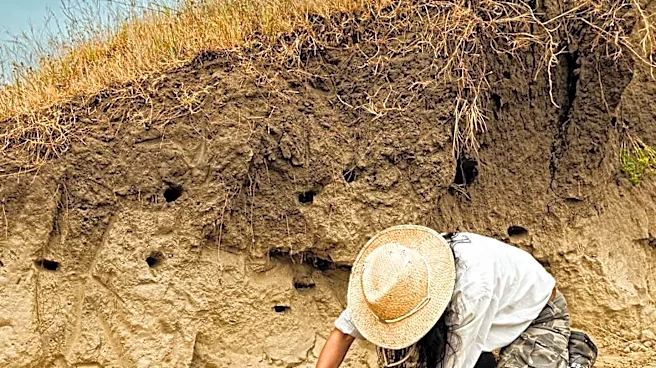
Archaeologists in El Salvador have unearthed human remains estimated to be nearly 3,000 years old at a burial site in Antiguo Cuscatlan, a suburb of San Salvador. The remains, believed to date back to around 850 BC, were found alongside a small Usulutan-style
ceramic vessel shaped like a sea turtle and remnants of cassava branches preserved beneath layers of volcanic ash. The remains were discovered face down and are set to undergo radiocarbon dating to confirm their age, as well as DNA analysis to determine the individual's sex. This site may contain burials similar to those found at the Chalchuapa archaeological site in western El Salvador, where remains of 33 people were uncovered in the 1970s.
Why It's Important?
This discovery is significant as it could provide new insights into the pre-Hispanic populations that inhabited Mesoamerica over two thousand years ago. The findings may offer valuable information about the cultural practices and societal structures of ancient civilizations in the region. The presence of Usulutan-style ceramics and cassava remnants suggests a complex interaction with the environment and possibly trade or cultural exchange. Understanding these ancient societies can enrich the historical narrative of Mesoamerica and contribute to the broader field of archaeology.
What's Next?
The remains will undergo further scientific analysis, including radiocarbon dating and DNA testing, to establish a more precise timeline and gather information about the individual's identity. Archaeologists may continue excavations at the site to uncover additional artifacts or remains, which could further illuminate the burial practices and lifestyle of the ancient inhabitants. The Ministry of Culture may also explore connections with other archaeological sites in the region to build a comprehensive understanding of the area's historical significance.
Beyond the Headlines
The discovery raises questions about the ethical considerations of excavating human remains and the responsibilities of preserving cultural heritage. It also highlights the importance of interdisciplinary collaboration in archaeology, combining scientific techniques with historical research to reconstruct past societies. The findings could influence future archaeological methods and encourage more sustainable practices in preserving ancient sites.