

What's Happening?
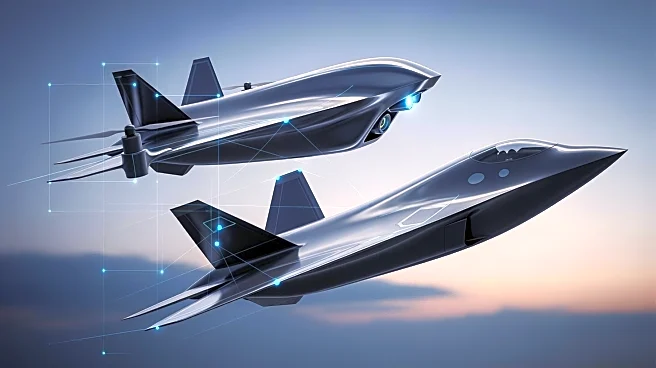
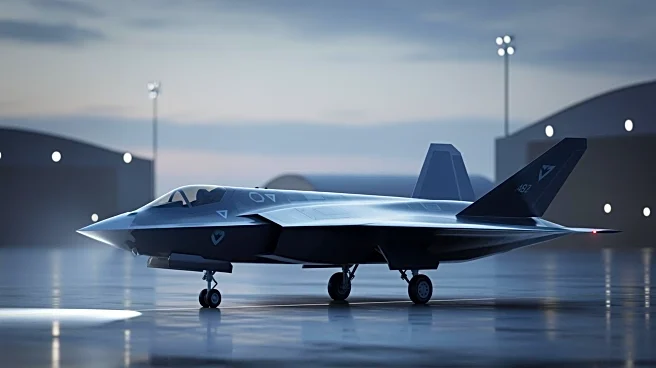
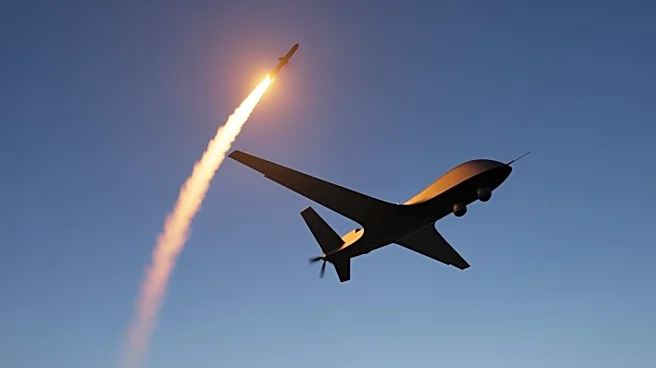
General Atomics Aeronautical Systems, Inc. (GA-ASI) and the U.S. Air Force have successfully demonstrated a manned-unmanned teaming exercise at Edwards Air Force Base in Southern California. The exercise involved the MQ-20 Avenger unmanned aircraft and an F-22
Raptor, showcasing the integration of autonomy and tactical data links for coordinated operations. The MQ-20 Avenger, equipped with advanced autonomy software, was able to receive and execute commands from the F-22, which was piloted by a human. This demonstration highlighted the ability of the MQ-20 to perform Combat Air Patrol and engage airborne threats, acting as a force multiplier for manned platforms. GA-ASI President David R. Alexander praised the flawless execution of the mission, emphasizing the integration of mission elements and the autonomous system's capability to make independent decisions.
Why It's Important?
The successful demonstration of manned-unmanned teaming between the MQ-20 and F-22 represents a significant advancement in military aviation technology. This capability allows for enhanced operational flexibility and effectiveness, as unmanned systems can perform complex tasks alongside human-piloted aircraft. The integration of autonomy and tactical data links can improve situational awareness and decision-making in combat scenarios, potentially reducing risks to human pilots. This development is crucial for the U.S. military's strategic goals, as it seeks to leverage advanced technologies to maintain a competitive edge in global defense. The ability to coordinate between manned and unmanned platforms could lead to more efficient use of resources and improved mission outcomes.
What's Next?
Following this successful demonstration, further testing and development of manned-unmanned teaming capabilities are likely to continue. The U.S. Air Force and GA-ASI may explore additional applications of this technology in various operational environments. Future exercises could involve more complex scenarios and additional aircraft types, expanding the scope of autonomous operations. The integration of advanced autonomy software into other military platforms could also be pursued, enhancing the overall capabilities of the U.S. defense forces. Stakeholders, including military leaders and defense contractors, will likely monitor these developments closely to assess their impact on future military strategies and procurement decisions.