





What's Happening?
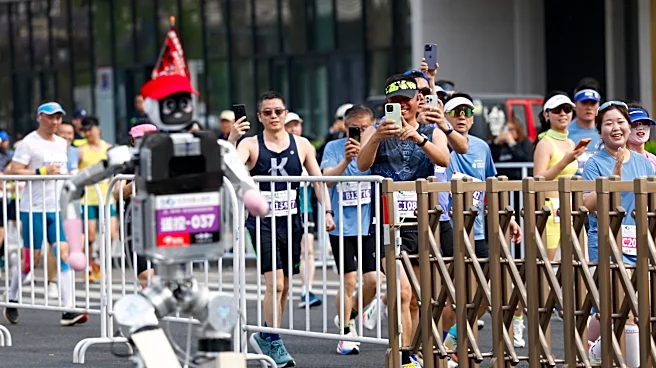
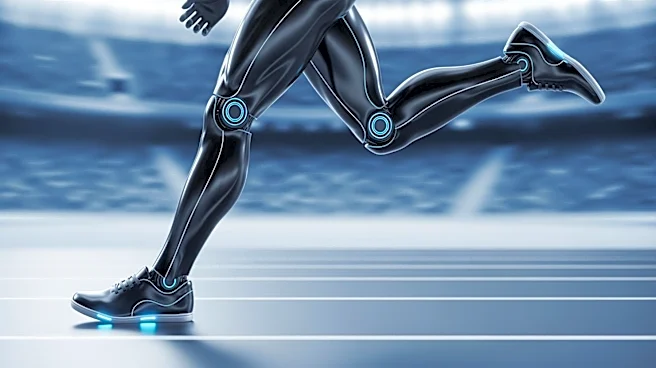
In a groundbreaking event, humanoid robots have outperformed human runners in a half-marathon held in Beijing, China. The event saw the robot named Shandian completing the 21-kilometer course in a record time of 50:26, surpassing the human record set
by Uganda's Jacob Kiplimo, who completed the distance in 57:20. Another robot, Lightning, finished the race in 48:19 but was disqualified from winning due to the event's scoring rules. The race featured robots from 100 companies and research institutions, with a significant portion of them navigating the course autonomously. The course was designed to test the robots' capabilities with various terrains, including slopes and narrow sections. This event marks a significant milestone in robotic development, showcasing China's advancements in the field.
Why It's Important?
This event highlights China's growing prowess in robotics, positioning the country as a potential leader in the global robotics industry. The successful performance of humanoid robots in a competitive setting demonstrates significant advancements in autonomous navigation and artificial intelligence. This could have far-reaching implications for various sectors, including logistics, manufacturing, and even sports, where robots could take on roles traditionally held by humans. The event also underscores the potential for robots to perform complex tasks in dynamic environments, which could lead to increased efficiency and innovation in industries reliant on automation.
What's Next?
Following this event, it is likely that there will be increased investment and interest in the development of humanoid robots, both within China and globally. Companies and research institutions may focus on enhancing the capabilities of robots to handle more complex tasks and environments. Additionally, there could be discussions around the ethical implications of robots participating in human-centric events and the potential impact on employment in sectors where automation could replace human labor. Policymakers and industry leaders may need to address these challenges as the technology continues to evolve.
Beyond the Headlines
The success of humanoid robots in this marathon raises questions about the future of sports and competitions. As robots become more capable, there may be a need to establish new categories or rules for events involving both humans and machines. This development also prompts a broader discussion on the role of technology in society and how it can be integrated in a way that complements human abilities rather than replacing them. The event serves as a reminder of the rapid pace of technological advancement and the need for thoughtful consideration of its implications.