





What's Happening?
NASA has announced significant changes to the designs and flight plans for two commercial crewed Moon landers, with the primary goal of achieving a lunar landing in 2028. These modifications affect landers from both Blue Origin and SpaceX. Artemis III,
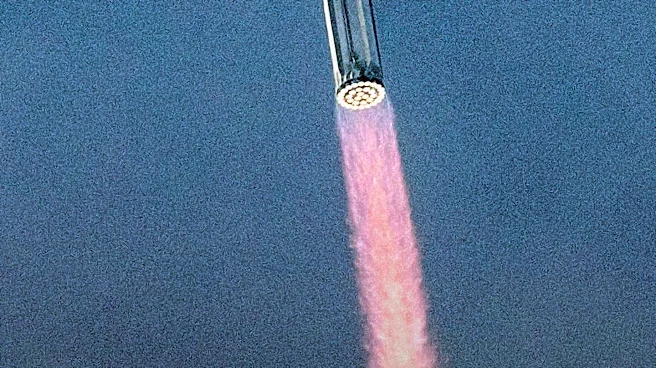
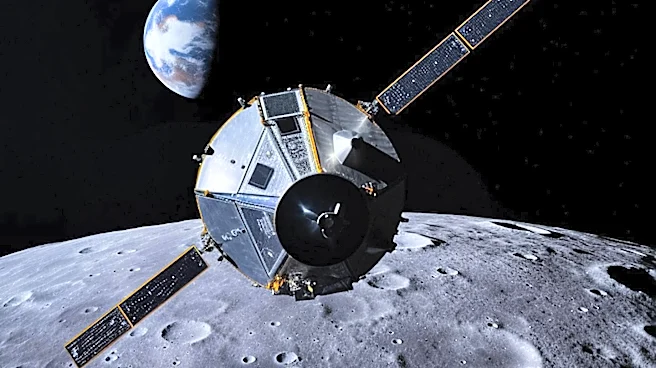
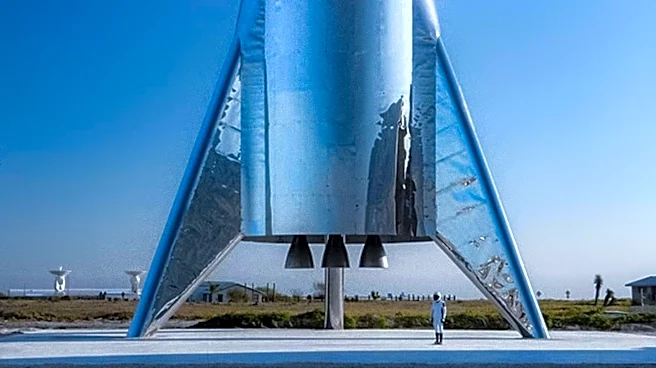
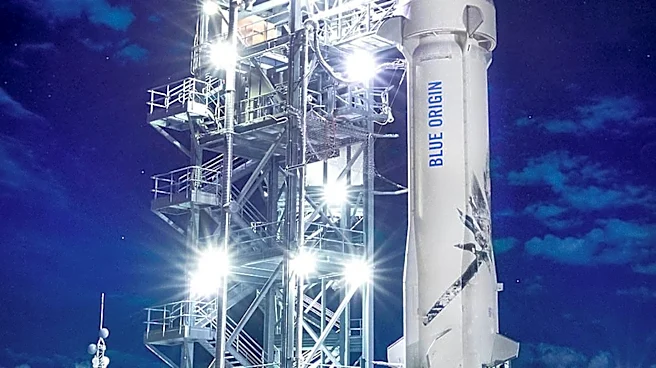
originally intended for a lunar landing, will now remain in low Earth orbit next year, where four astronauts will practice docking the Orion spacecraft with test versions of both landers. The Artemis IV mission is now designated as the mission planned to land astronauts on the Moon. NASA officials, including Jeremy Parsons, the Artemis program manager, stated that the agency will defer the decision on which provider will execute the first crewed lunar landing until later, based on lander readiness. Both landers will employ different approaches to reach lunar orbit than initially planned. The Starship lander will rendezvous with Orion in Earth orbit, and after docking, Starship will propel the combined stack to low lunar orbit. Blue Origin's approach involves using three transfer stages to transport its Blue Moon Mark 2 lander to an elliptical polar orbit, bypassing propellant transfer. Both companies are required to complete an uncrewed demonstration mission before NASA's crewed landings. NASA is also introducing a stretch Centaur upper stage as an option for the Space Launch System (SLS), which carries approximately 50% more propellant than the standard Centaur. This switch from the Exploration Upper Stage was made due to concerns about meeting timelines and managing cost and schedule growth.
Why It's Important?
These changes to the Artemis program are crucial for the future of U.S. human space exploration, particularly the goal of returning astronauts to the Moon. By re-sequencing missions and modifying lander designs, NASA aims to mitigate risks and optimize the chances of a successful 2028 lunar landing. The decision to have Artemis III focus on in-orbit docking practice allows for critical operational experience and testing of the landers before a crewed lunar descent, enhancing safety and mission reliability. The flexibility in choosing between Blue Origin and SpaceX for the first crewed landing, based on readiness, fosters competition and incentivizes both companies to accelerate their development while maintaining high standards. The adoption of a stretch Centaur upper stage for the SLS demonstrates NASA's commitment to leveraging proven technologies and adapting its launch capabilities to meet mission requirements more efficiently. These strategic adjustments underscore the complexities and challenges inherent in ambitious space endeavors, highlighting the need for adaptability and rigorous testing to ensure the success of the Artemis program and solidify the U.S.'s leadership in lunar exploration.
What's Next?
NASA will proceed with Artemis III next year, focusing on in-orbit docking exercises with test versions of the commercial landers. The agency plans to make a decision on which provider will conduct the first crewed lunar landing for Artemis IV at a later date, contingent on the readiness of Blue Origin's and SpaceX's landers. Both companies are mandated to complete uncrewed demonstration missions prior to any crewed landings. NASA expects to choose between the two SLS upper stages around next summer, coinciding with the timeframe of Artemis III. The Artemis III mission is currently running approximately 90 days behind schedule, with a planned launch for summer 2027. This delay is attributed to supply chain issues, particularly concerning avionics for lunar builds. Blue Origin is also working to return its New Glenn rocket to flight after an incident in May, aiming to restart pad operations in November. SpaceX is planning for six to eight refueling flights for its Starship in orbit, a figure that NASA is tracking closely, with a propellant transfer demonstration expected to provide more precise data on the required number of flights.
Beyond the Headlines
The strategic adjustments to the Artemis program reflect a broader shift in how major space initiatives are managed, emphasizing risk reduction, technological flexibility, and the integration of commercial partners. The delay in Artemis III due to supply chain issues highlights the vulnerabilities in complex aerospace manufacturing and the global interconnectedness of high-tech industries. This situation underscores the importance of robust supply chain management and domestic manufacturing capabilities for critical space components. Furthermore, the reliance on commercial entities like Blue Origin and SpaceX for lunar landers signifies a growing trend towards public-private partnerships in space exploration. This model aims to foster innovation, reduce costs, and accelerate development, but it also introduces new complexities in oversight and coordination. The ongoing development of advanced spacesuits by NASA and Axiom Space, aiming to significantly reduce suit mass, points to a continuous effort to enhance astronaut mobility and efficiency during lunar surface operations, which will be critical for future long-duration missions and the establishment of a lunar base. These developments collectively shape the future trajectory of human presence beyond Earth, influencing technological advancements, international collaborations, and the long-term sustainability of space exploration.