






What's Happening?
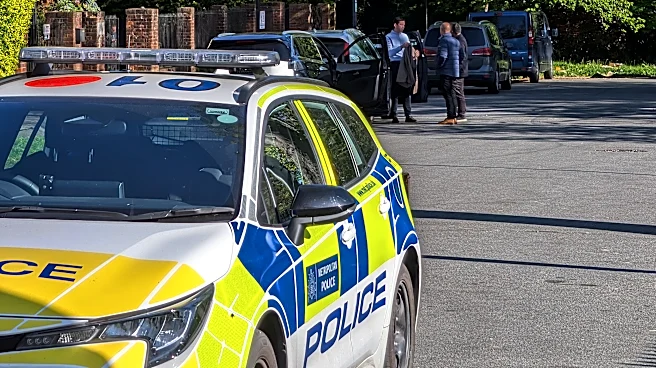
The U.S. Department of Justice has declined to provide unredacted documents related to Jeffrey Epstein to British police without a formal request. This decision impacts ongoing investigations by the Thames Valley Police and the Metropolitan Police into
allegations of misconduct involving Andrew Mountbatten-Windsor and Peter Mandelson. Both individuals are accused of passing sensitive information to Epstein. The British police have been in discussions with the Crown Prosecution Service, which is hesitant to authorize prosecutions without the original documents. Despite informal attempts to obtain the documents, the U.S. insists on a formal mutual legal assistance request, a process known for its complexity and length.
Why It's Important?
The refusal to hand over unredacted documents complicates the British investigations into high-profile figures linked to Epstein. The inability to access these documents could hinder the prosecution's ability to bring charges, potentially allowing those involved to evade accountability. This situation underscores the challenges of international legal cooperation, especially in cases involving sensitive political figures and allegations of misconduct. The outcome of these investigations could have significant implications for public trust in both the U.S. and UK legal systems, as well as for the individuals involved.
What's Next?
British police have formally requested the documents, and interviews with witnesses in royal and government circles are expected to commence soon. The investigations may expand to include flights linked to Epstein that landed in the UK, potentially opening new avenues of inquiry. The European anti-fraud office is also investigating Mandelson, which could lead to further legal challenges. The outcome of these investigations will depend heavily on the cooperation between U.S. and UK authorities and the ability to secure necessary evidence.