






What's Happening?
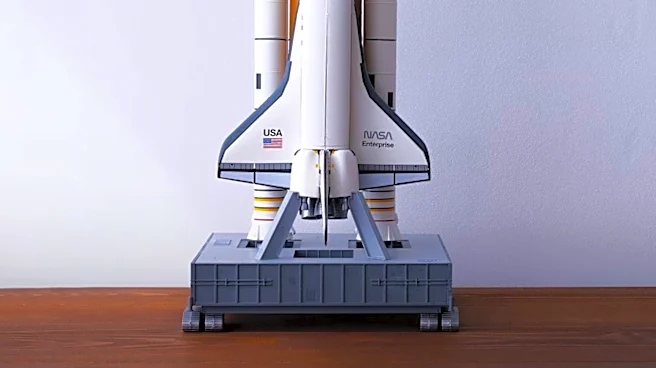
The California Science Center in Exposition Park, Los Angeles, has unveiled the Samuel Oschin Air and Space Center, a 200,000-square-foot expansion designed to showcase the Space Shuttle Endeavour in a vertical launch configuration. This new facility,
scheduled to open to the public on November 13, 2026, will serve as the centerpiece of the museum's newest galleries. Media members were given a preview of the center, where Endeavour is displayed alongside authentic solid rocket boosters and the last remaining flight-qualified external tank, ET-94. Governor Gavin Newsom praised the project, emphasizing its potential to inspire. The new air and space center nearly doubles the California Science Center's exhibit space, featuring 100 artifacts, including rare and historic aerospace objects, and 100 hands-on exhibits focused on science, technology, and engineering. The facility was uniquely constructed around the shuttle, with the concrete building erected to a certain point, followed by the mating of Endeavour to the stack, and then the steel diagrid roof built above it.
Why It's Important?
The unveiling of the Samuel Oschin Air and Space Center with the Space Shuttle Endeavour in its vertical launch configuration is a significant development for U.S. education and tourism. This unique display, the only one in the world to feature a complete space shuttle system with all authentic flight hardware, is expected to draw visitors from across the nation and internationally, boosting the local economy in Los Angeles. More importantly, the center is designed to be an educational centerpiece, inspiring future generations in science, technology, engineering, and exploration. By providing hands-on exhibits and showcasing historical aerospace objects, it aims to foster interest in STEM fields, which are critical for national innovation and competitiveness. The project also represents a substantial investment in public science education, offering a tangible connection to the history of space exploration and its future possibilities. This initiative can help address the ongoing need for a skilled workforce in advanced technological sectors by sparking curiosity and encouraging academic pursuits in these areas.
What's Next?
With the public opening scheduled for November 13, 2026, the California Science Center anticipates high demand for the Samuel Oschin Air and Space Center. Reservations are strongly encouraged, with a service fee applied, though waived for members. This suggests a significant influx of visitors, which will require robust operational management to ensure a smooth experience. The center's success will likely be measured not only by visitor numbers but also by its impact on educational engagement and STEM interest among youth. Future plans may include expanding educational programs, developing new interactive exhibits, and potentially hosting special events related to space exploration. The unique display of Endeavour could also serve as a model for other museums seeking to create immersive and inspiring exhibits. The long-term goal is to solidify the California Science Center's role as a premier institution for science education and a major tourist attraction, continually inspiring innovation and scientific literacy.
Beyond the Headlines
The Space Shuttle Endeavour's new home transcends its role as a mere museum exhibit; it embodies a profound cultural and historical narrative for the United States. Endeavour represents a pinnacle of human ingenuity and collaboration, symbolizing decades of scientific advancement and the nation's commitment to space exploration. Its vertical display evokes the awe and ambition of launch, connecting visitors directly to the human endeavor of reaching beyond Earth. This exhibit can serve as a powerful reminder of the importance of public investment in science and technology, fostering a sense of national pride and collective aspiration. Ethically, it highlights the responsibility of preserving historical artifacts not just as relics, but as living inspirations for future generations. The center's focus on hands-on learning also underscores a pedagogical shift towards experiential education, recognizing that direct engagement with scientific principles can be more impactful than traditional methods. This development reinforces the idea that museums are not just repositories of the past but dynamic platforms for shaping the future.