

What's Happening?
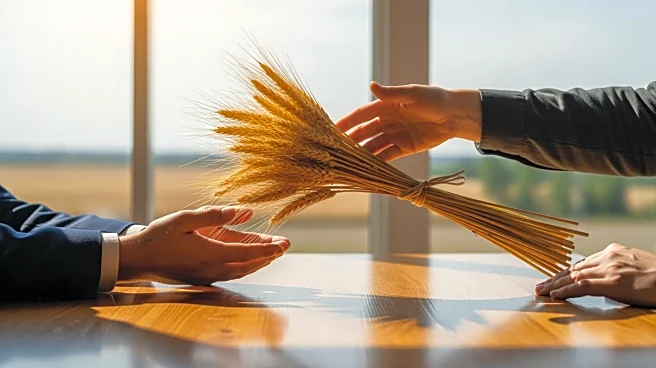
Union Minister for Agriculture Shivraj Singh Chouhan has defended the India-US interim trade deal against criticism from Rahul Gandhi, Leader of Opposition in the Lok Sabha. Chouhan accused Gandhi of misleading farmers about the deal, asserting that it protects
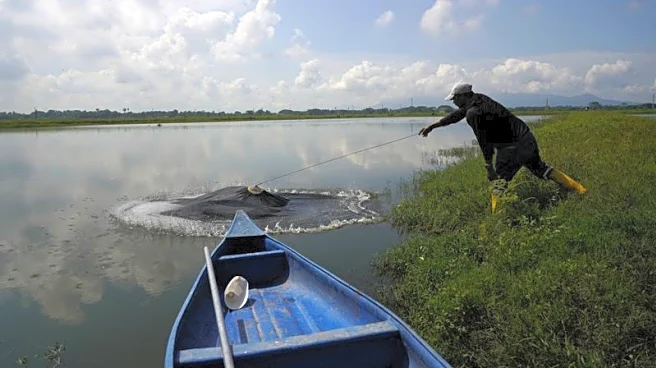
the rights of farmers, fishermen, craftsmen, startups, and MSMEs. The minister emphasized that the regulated import practices under the deal do not harm farmers' interests due to controlled costs and limited quantities. Meanwhile, Gandhi convened a meeting with farmer unions to discuss concerns that the deal could harm Indian farmers, particularly those cultivating corn, soybean, cotton, fruits, and nuts.
Why It's Important?
The debate over the India-US trade deal highlights the tension between trade liberalization and domestic agricultural interests. The deal's implications for Indian farmers are significant, as it could affect their market competitiveness and income. The government's defense of the deal underscores its commitment to balancing international trade relations with domestic economic priorities. However, the opposition's concerns reflect broader apprehensions about the impact of global trade agreements on local industries. The outcome of this debate could influence future trade policies and the political landscape in India.
What's Next?
As the debate continues, both the government and opposition are likely to engage in further discussions with stakeholders to address concerns and clarify the deal's implications. The government may seek to reassure farmers and other affected groups through policy adjustments or additional support measures. Meanwhile, the opposition may continue to mobilize support among farmer unions and other groups to challenge the deal. The ongoing discourse could lead to broader discussions on trade policy and its impact on domestic industries.