







What's Happening?
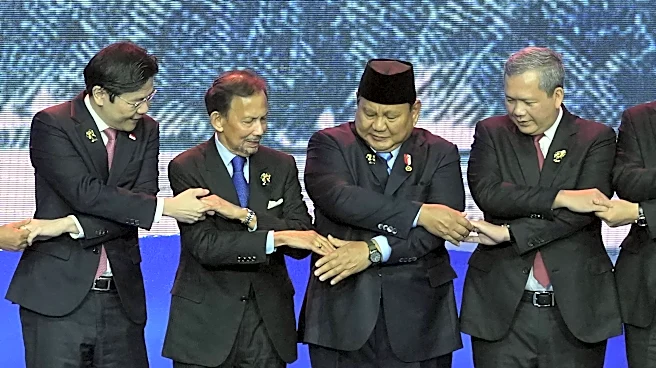
Prime Minister Narendra Modi has returned to New Delhi after a two-day visit to Manila, Philippines. During his visit, Prime Minister Modi participated in several key regional gatherings, including the 23rd ASEAN-India Summit, the 21st East Asia Summit, and
the Quad Leaders’ Meeting. He also held a bilateral meeting with Philippine President Ferdinand R. Marcos Jr., where discussions focused on strengthening cooperation in defense, security, trade, and investment. Additionally, Prime Minister Modi visited the Gurudwara Khalsa Diwan in Manila to mark the commencement of its redevelopment. On the sidelines of these summits, he engaged with counterparts from Singapore and Thailand to discuss regional and global issues. At the ASEAN-India summit, Prime Minister Modi proposed nine initiatives, including a long-term maritime plan, free e-visas for tourists from ASEAN nations, cooperation on mining and critical minerals, and a framework for technical exchanges in civil nuclear energy. He emphasized India's commitment to its comprehensive strategic partnership with ASEAN, aiming for peace, stability, and predictability in the region.
Why It's Important?
Prime Minister Modi's visit underscores India's strategic focus on strengthening its presence and influence in the Indo-Pacific region. The proposed initiatives at the ASEAN-India summit, particularly the long-term maritime plan and cooperation in critical minerals, highlight India's efforts to enhance regional connectivity, economic ties, and resource security. The emphasis on maritime security and freedom of navigation at the East Asia Summit is crucial for maintaining stability in a region vital for global trade routes. India's participation in the Quad Leaders’ Meeting reinforces its commitment to a free, open, and inclusive Indo-Pacific, aligning with the strategic interests of the U.S., Japan, and Australia. These engagements are significant for counterbalancing other regional powers and fostering a multilateral approach to security and economic development. The discussions on defense and security cooperation with the Philippines also signal a deepening of bilateral ties, which could have implications for regional security dynamics.
What's Next?
Following Prime Minister Modi's visit, the proposed initiatives at the ASEAN-India Summit will likely move into implementation phases, requiring further diplomatic engagement and technical cooperation among member nations. The long-term maritime plan could lead to increased joint naval exercises and enhanced maritime domain awareness in the Indo-Pacific. The offer of free e-visas for ASEAN tourists is expected to boost tourism and economic exchange. Continued discussions on critical minerals and civil nuclear energy frameworks could pave the way for new partnerships and investments in these sectors. The Quad's commitment to delivering trusted solutions across the Indo-Pacific will likely translate into concrete projects in maritime security, supply chains, and new technologies. Future bilateral meetings between India and the Philippines, as well as other ASEAN nations, will likely build upon the foundations laid during this visit, focusing on specific areas of cooperation outlined in the discussions.
Beyond the Headlines
Prime Minister Modi's diplomatic tour extends beyond immediate policy announcements, signaling a broader strategic recalibration in India's foreign policy towards Southeast Asia and the Indo-Pacific. The emphasis on a 'constructive and trusted' partnership within the Quad framework suggests a nuanced approach to regional security, aiming to build alliances based on shared values rather than confrontational postures. The visit to the Gurudwara Khalsa Diwan also highlights the cultural and diaspora diplomacy aspects of India's foreign relations, fostering goodwill and strengthening ties with Indian communities abroad. The comprehensive nature of the proposed initiatives, spanning economic, security, and cultural domains, indicates a long-term vision for India's role as a key player in shaping the regional order. This proactive engagement could lead to a more multipolar Indo-Pacific, offering diverse partnerships and reducing reliance on any single dominant power.