




What's Happening?
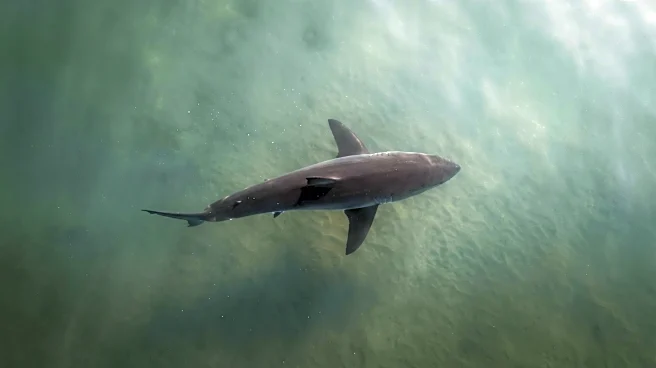
Drone operator Carlos Gauna, known as 'TheMalibuArtist,' captured footage of a great white shark circling a swimmer off the coast of Santa Barbara. While Gauna regularly documents shark interactions with humans, this particular encounter made him uneasy
because the shark, estimated to be a 9-foot juvenile, lingered unusually close to the swimmer for an extended period, circling multiple times. Gauna theorized that turbid and muddy water conditions, caused by big surf, might have made it difficult for the shark to differentiate the human from potential prey. The swimmer, unaware of the shark's close proximity, later told Gauna he had felt something moving in the water but had not seen the shark. Chris Lowe, director of the Shark Lab at Cal State Long Beach, reviewed the video and described the shark's behavior as inquisitive rather than aggressive.
Why It's Important?
This incident underscores the increasing frequency of human-shark encounters along California's coast, driven by factors like marine heat waves, El Niño, and climate change, which are pushing juvenile white sharks northward. While experts like Chris Lowe reiterate that sharks generally recognize humans as non-food, the close and prolonged circling in this instance highlights the potential for misidentification, especially in poor visibility conditions. Gauna's work is crucial in educating the public about the constant presence of these apex predators in coastal waters and promoting coexistence. The footage serves as a visual reminder that humans are entering the sharks' domain, emphasizing the need for respect and awareness rather than fear, even as encounters become more common.
What's Next?
As ocean temperatures continue to rise, experts predict a continued increase in shark presence along California's coast, particularly juvenile white sharks. Researchers will likely continue tagging and monitoring shark populations to better understand their movements and behaviors. Drone operators like Carlos Gauna will likely continue to provide valuable visual data, contributing to both public awareness and scientific research. Educational efforts will remain critical to inform beachgoers about safe practices and the importance of coexisting with marine wildlife. The focus will be on understanding how environmental changes influence shark distribution and how humans can adapt to share coastal waters safely, reinforcing the message that most encounters are uneventful and sharks are not inherently aggressive towards humans.
Beyond the Headlines
The drone footage of the shark circling a swimmer delves into deeper implications regarding human perception of nature and the impact of climate change on marine ecosystems. The increased presence of sharks due to warming waters is a direct consequence of broader environmental shifts, forcing a re-evaluation of human interaction with the natural world. This event challenges the often sensationalized narrative of sharks as dangerous predators, instead promoting a view of them as integral parts of the ecosystem whose behaviors are influenced by environmental factors. It also highlights the role of technology, like drones, in providing unprecedented insights into wildlife behavior, fostering a more informed and nuanced understanding of marine life and our place within it. The swimmer's calm acceptance of the risk ('at least I'll be in my happy place') also speaks to a philosophical approach to nature, acknowledging inherent risks while pursuing personal enjoyment.