



What's Happening?
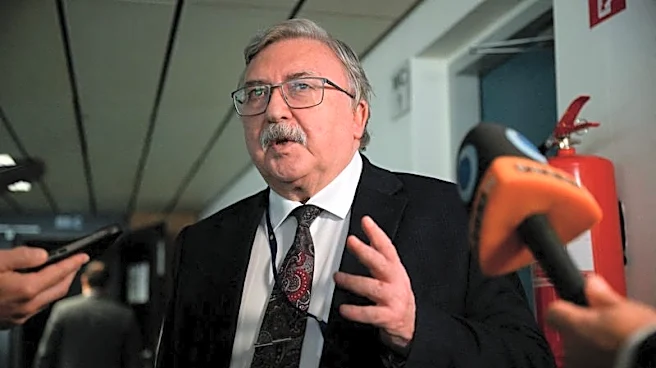
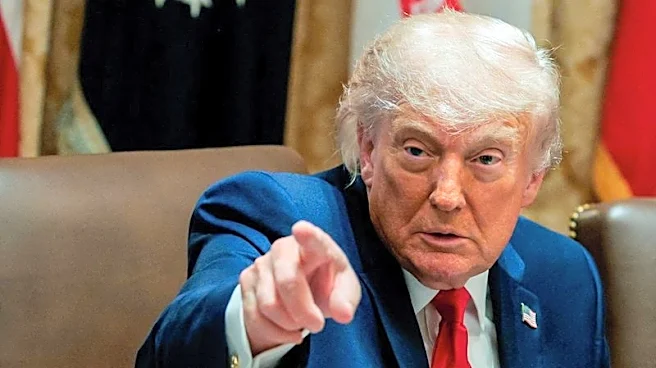
Mohsen Rezaei, a military advisor to Iran's Supreme Leader, has accused President Trump of bringing U.S.-Iran nuclear negotiations to a standstill. Rezaei stated that the talks are deadlocked due to the U.S.'s refusal to release $24 billion in frozen
Iranian assets, which Iran views as a test of trust. He criticized President Trump's 'ambiguity' strategy and his withdrawal from the 2015 nuclear deal. Rezaei warned that Iran is prepared to expand the conflict beyond the Persian Gulf if hostilities resume, although he considers the likelihood of war to be low.
Why It's Important?
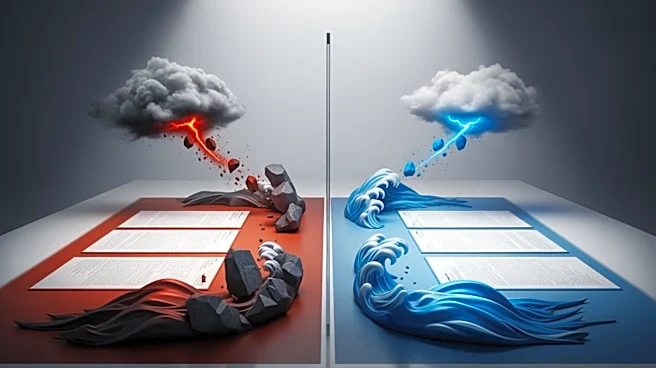
The deadlock in U.S.-Iran negotiations has significant implications for regional stability and global security. The release of Iranian assets is a critical issue for Iran, which sees it as a prerequisite for any further diplomatic engagement. The situation also affects global oil markets, as tensions in the Persian Gulf could disrupt oil supplies. President Trump's approach to the negotiations is under scrutiny, with potential impacts on his foreign policy legacy and the broader U.S. strategy in the Middle East. The outcome of these talks could influence future U.S.-Iran relations and the geopolitical landscape of the region.
What's Next?
The next steps in the U.S.-Iran negotiations remain uncertain, with both sides holding firm on their positions. The U.S. may face pressure to release the frozen assets to advance the talks, while Iran may continue to leverage its regional influence to gain concessions. The international community, including European allies, may play a role in mediating the situation to prevent further escalation. The potential for renewed hostilities remains a concern, with implications for regional security and global economic stability.