
What's Happening?
The Senate committee on health is scheduled to convene to consider three of President Trump's nominations for key positions within the Department of Health and Human Services (HHS). Among the nominees
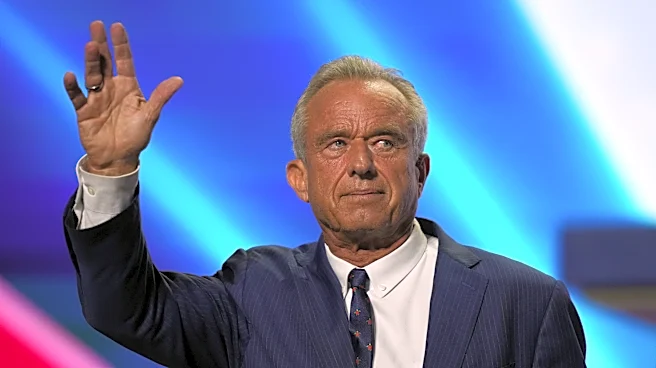
are Dr. Nicole Saphier for Surgeon General, Chris Klomp for Deputy Secretary of HHS, and Dr. Timothy Westlake for Assistant Secretary for Mental Health and Substance Use. This marks President Trump's third attempt to secure a Surgeon General, following the withdrawal of Dr. Janette Nesheiwat due to credential concerns and the failure of Dr. Casey Means' nomination after a contentious hearing. Dr. Saphier, a radiologist and former Fox News Channel contributor, lacks a public health background but has not faced the same level of opposition as previous nominees. Chris Klomp, a former health tech executive, has been managing day-to-day operations at HHS since February and is known for his pragmatic leadership. Dr. Westlake, an emergency medicine physician, is nominated for a role within an agency that has experienced significant staff cuts under current Health Secretary Robert F. Kennedy Jr.
Why It's Important?
The confirmation of these nominees is crucial for the effective functioning and leadership of the Department of Health and Human Services, an agency vital to public health policy in the U.S. The prolonged vacancy of the Surgeon General position since January 2025 highlights a significant gap in national health leadership. The selection of Dr. Saphier, despite her lack of a public health background, could signal a shift in the administration's approach to public health messaging and priorities, particularly given her past comments on vaccines. Chris Klomp's potential confirmation as Deputy Secretary is significant as he would be second-in-command to Secretary Kennedy, who has a strained relationship with Congress. His reputation as an effective leader could bring stability to the department. Dr. Westlake's role is critical for addressing mental health and substance use issues, especially in light of the restructuring challenges faced by SAMHSA. The Senate's scrutiny of these nominees will reveal the administration's direction on critical health issues such as vaccine policy, drug pricing, and the response to public health crises like measles outbreaks.
What's Next?
Senators will question the nominees during the committee hearing, focusing on their qualifications, policy stances, and past statements. Dr. Saphier is expected to face questions regarding her views on vaccines, particularly her criticisms of COVID-19 vaccine booster requirements and her questioning of the necessity of the hepatitis B vaccine for all infants. Senator Bill Cassidy, a liver doctor and committee chair, may specifically address her comments on hepatitis B. Chris Klomp will likely be grilled on issues such as measles outbreaks, abortion medication, drug prices, and vaccines, building on discussions from his recent appearance before the Senate Finance Committee. The relationship between Health Secretary Robert F. Kennedy Jr. and Congress is expected to cast a shadow over the proceedings, potentially influencing the reception of his nominees. Following the hearing, the committee will vote on whether to recommend the nominees for full Senate confirmation. The outcome will determine the future leadership of key health agencies and the direction of U.S. health policy.
Beyond the Headlines
The ongoing struggle to confirm a Surgeon General reflects deeper political divisions and ideological clashes surrounding public health in the U.S. The repeated difficulties in securing a nominee underscore the politicization of scientific and medical roles, potentially impacting public trust in health institutions. The choice of Dr. Saphier, a radiologist with a background in media commentary rather than public health, could signal a shift towards a more communication-focused or politically aligned approach to the Surgeon General's role, rather than one rooted purely in public health expertise. This trend could further blur the lines between scientific guidance and political messaging. Furthermore, the challenges faced by SAMHSA under Secretary Kennedy, including staff cuts and a stalled restructuring plan, highlight broader concerns about the stability and effectiveness of federal health agencies. The Senate's confirmation process for these nominees is not just about filling positions; it's about defining the future direction and integrity of U.S. public health policy in an increasingly complex and polarized environment.